

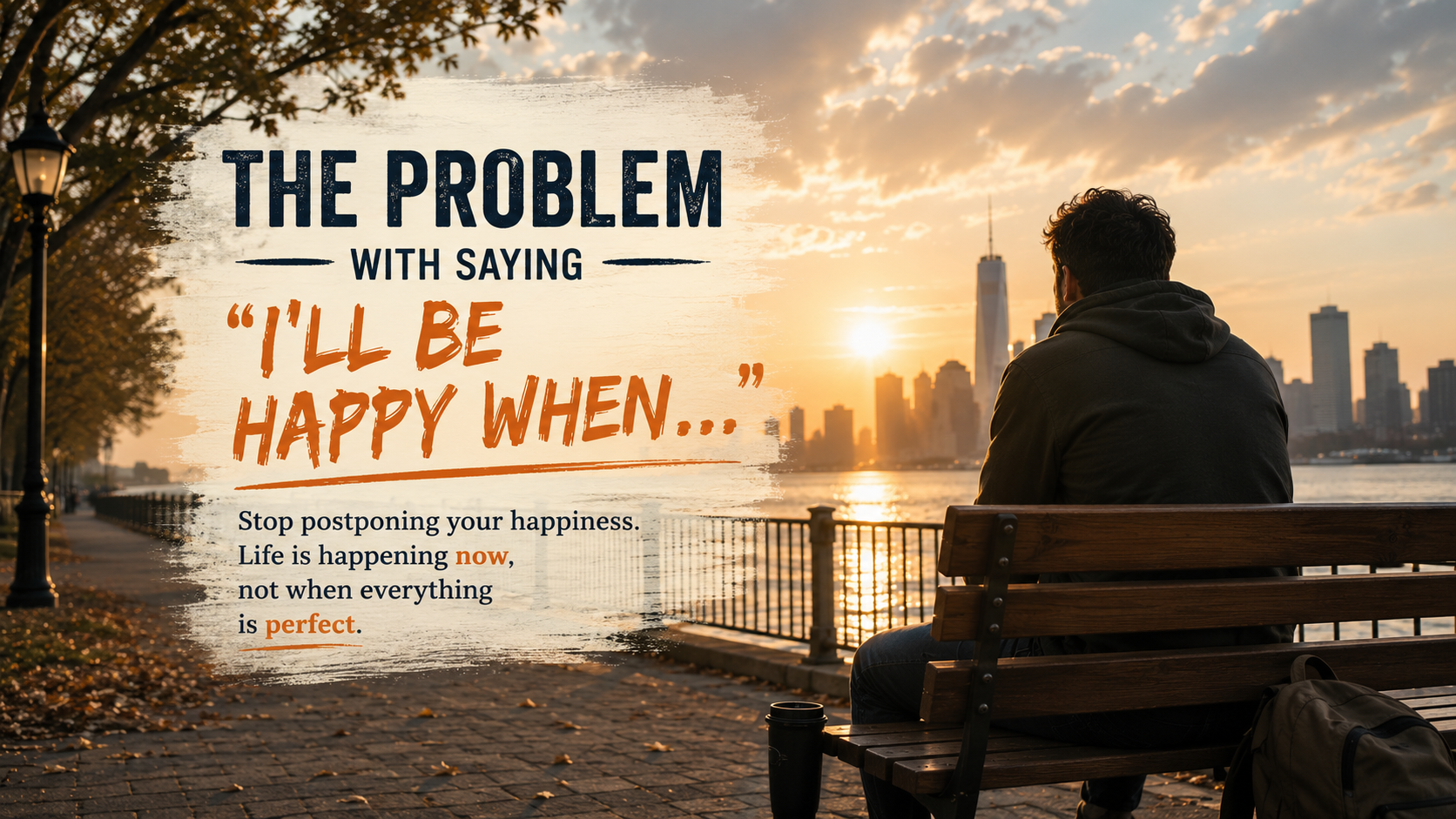
For years, I kept moving happiness to the next milestone, until I realised that life was happening while I was waiting for it to begin
For a long time, I had a habit I never really noticed.
Whenever life became difficult, tiring, uncertain, or simply too busy, I would tell myself that things would feel better once I crossed the next milestone.
I would be happier
when work became less demanding,
when a particular problem was resolved,
when there was more money in the bank,
when I had more time for myself,
when family responsibilities became lighter, or when life finally settled into the version I had imagined.
There was always something ahead of me that seemed to contain the happiness I was missing in the present, and because that future always looked close enough to reach, I never questioned whether I was spending too much of my life waiting for it.
The strange thing is that some of those milestones eventually arrived. Problems that once kept me awake at night disappeared. Goals that had seemed distant became part of normal life. Things I had desperately wanted became things I barely thought about anymore, yet happiness did not arrive with the permanence I had expected.
There was usually a brief sense of relief or satisfaction, followed surprisingly quickly by another goal, another worry, another responsibility, or another reason to postpone feeling content. Without realising it, I had created a life in which happiness was always one achievement away, and the finish line moved every time I reached it.
I remember one evening particularly well, although nothing extraordinary happened that day. It had been a long working day, the kind where one meeting seems to lead straight into another and you finish with the strange feeling that you have been busy for ten hours but cannot remember having a proper moment to yourself.
There were still messages on my phone that I had not answered, a few things I wanted to complete before the next morning, and several thoughts about work already forming in my head even though the working day was technically over.
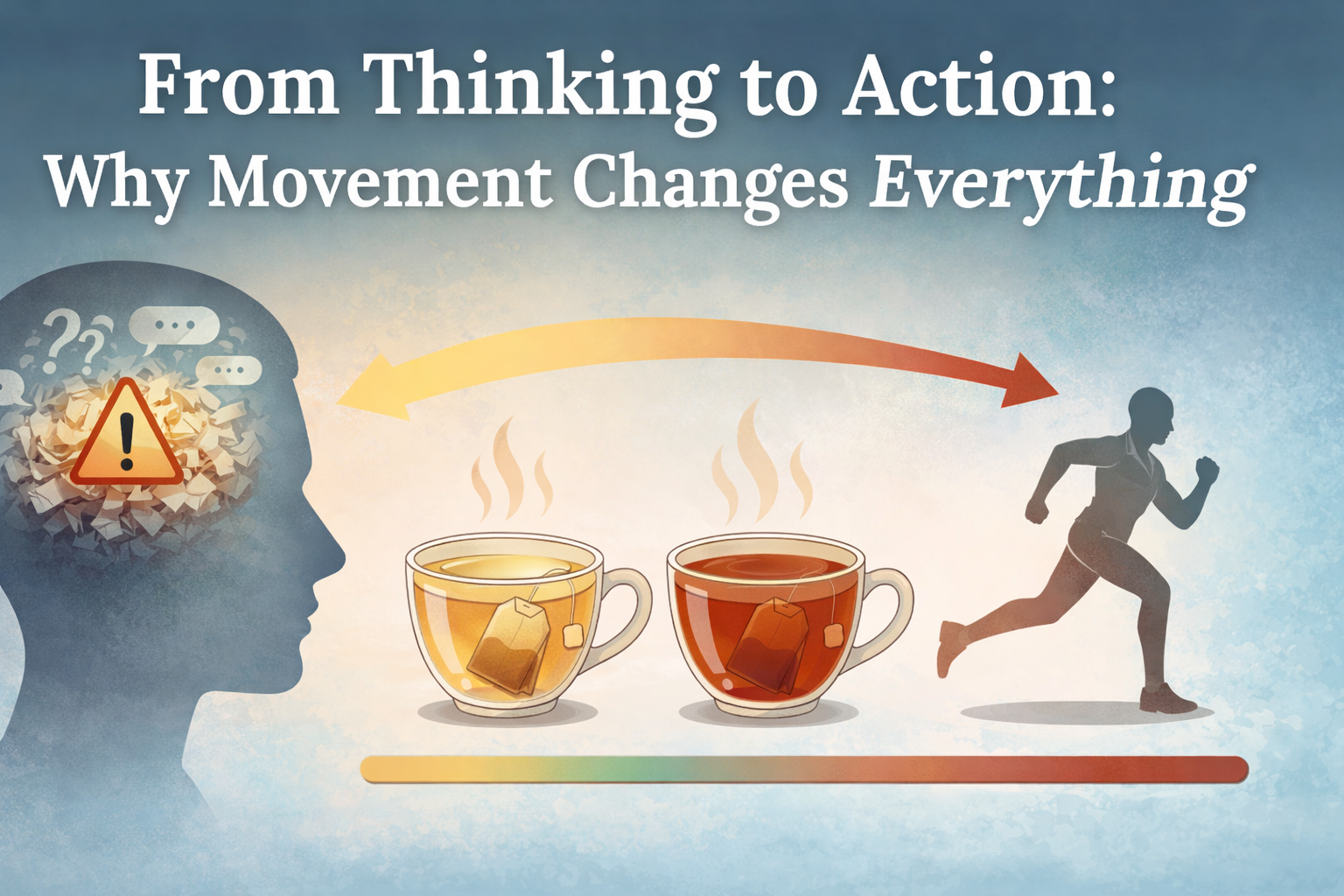
I was sitting with a cup of tea that had already started getting cold when someone in my family began telling me about something that had happened during their day.
I cannot even remember what the story was about now, and that is probably the part that stays with me most. They were talking to me, but my mind was somewhere else, calculating tomorrow, replaying today, thinking about what still needed to happen before I could finally relax.
At some point I realised I had not heard the last few sentences.
I looked around and suddenly became aware of how ordinary and complete that moment actually was. I was home. The people who mattered to me were nearby. There was food on the table, warmth in the room, a roof above us, and no immediate crisis that needed solving, yet mentally I was absent because I was waiting for some future version of life in which I would finally have permission to enjoy all of this properly.
That thought stayed with me for much longer than I expected.
I began wondering how many evenings like that I had already allowed to disappear.
How many conversations had I half-listened to because I was thinking about tomorrow?
How many weekends had I spent recovering from one week while mentally preparing for the next?
How many ordinary moments had I treated as background scenery because I believed the important part of life was still somewhere ahead?
It was uncomfortable to admit that I had probably been doing this for years.
We often imagine that we lose life through dramatic events, but I think we lose a surprising amount of it through postponement. We tell ourselves we will enjoy life properly once the current busy period is over, but another busy period arrives.
We say we will spend more time with people when work settles down, but work develops a new deadline.
We promise ourselves we will travel when there is more time, exercise when life becomes easier, read when responsibilities reduce, call someone when things are less hectic, and sit peacefully with the people we love when everything else is finally under control.
The problem is that everything is almost never under control at the same time.
There will always be something unfinished.
There will always be an email waiting, a financial concern, a career decision, a family responsibility, a health worry, a repair that needs doing, a person who disappoints us, a plan that changes, or a future that feels slightly uncertain.
If happiness requires the absence of all these things, then we may spend most of our lives waiting for a condition that rarely exists.
That realisation changed the question I had been asking myself. Instead of asking, “When will life become good enough for me to feel happy?”, I started asking, “What exactly am I waiting for?”
I did not suddenly become someone who stopped caring about ambition, work, money, responsibilities, or the future. I still want to achieve things, improve things, solve problems, create opportunities, and make life better for the people around me.
I do not believe happiness requires abandoning ambition or pretending that circumstances do not matter, because circumstances certainly do matter. Financial security matters, meaningful work matters, good health matters, relationships matter, and having a sense of progress matters.
What changed was my belief that all of those things needed to fall perfectly into place before I was allowed to appreciate the life already happening around me.
For many of us, happiness becomes attached to the phrase “when I.”
I will be happy when I get promoted.
I will be happy when I earn more.
I will be happy when the children become more independent.
I will be happy when I find the right person.
I will be happy when I buy the house.
I will be happy when I retire.
I will be happy when this difficult period is over.
There is nothing wrong with wanting any of those things, but there is something dangerous about placing our entire emotional future inside them. The moment we do that, today becomes merely something to survive on the way to tomorrow.
I have also learned that getting what we want does not automatically teach us how to enjoy it. If we spend twenty years training ourselves to chase the next thing, we should not be surprised when reaching a goal simply triggers another chase.
The mind becomes very good at moving the target. What once represented success becomes normal, what once felt like enough becomes insufficient, and something we once dreamed about becomes something we barely notice because our attention has already moved elsewhere.
I have seen this in my own life with work especially. There have been points in my career when I believed reaching the next level would bring a certain sense of arrival.
Then I reached it and discovered that every new level brings its own expectations, pressures, decisions, responsibilities, and uncertainties.
Achievement can be deeply satisfying, but it does not eliminate the human tendency to want more. If anything, achievement sometimes strengthens it.
That is why I no longer think happiness and ambition have to sit on opposite sides of the table.
I can want more without treating what I already have as meaningless.
I can work toward tomorrow while still being present today.
I can be dissatisfied with one part of my life without declaring the whole life unsatisfactory.
That distinction has become increasingly important to me.
There is another lesson that took me longer to understand, and it concerns people. At different points in life, most of us place part of our happiness in someone else’s hands.
We think a partner should make us feel complete, children should make us proud, friends should always understand us, colleagues should appreciate us, managers should recognise our contribution, and family members should behave in ways that protect our emotional comfort.
When they do not, we feel that something has been taken from us.
Relationships are important to me, perhaps more now than they were when I was younger, but I have gradually understood that expecting another person to maintain my happiness is unfair to both of us. People have their own fears, pressures, personalities, insecurities, histories, and bad days.
Even the people who love us deeply will sometimes misunderstand us, disappoint us, become distracted, say the wrong thing, or fail to provide what we hoped they would provide.
If my peace depends entirely on everyone around me behaving exactly as I want, then I have built my happiness on something I cannot control.
That does not mean accepting disrespect or remaining in unhealthy relationships. It means understanding the difference between allowing people to add happiness to my life and making them responsible for creating it.
The distinction sounds small, but emotionally it changes everything.
I have also become more aware of how easily we overlook ordinary happiness because it does not announce itself dramatically. We tend to remember major celebrations, holidays, promotions, weddings, achievements, and other significant moments, yet much of the happiness in a human life exists between these events.
It exists in the cup of tea someone makes without being asked, in the conversation at the dinner table, in driving somewhere with music playing, in receiving a message from an old friend, in laughing at something completely ridiculous, in sitting beside someone without needing to fill the silence, or in coming home after a tiring day and recognising that this ordinary place is part of the life you once hoped to build.
These moments rarely look important while they are happening.
Years later, they may be the moments we miss most.
That thought has changed the way I think about happiness because I no longer see it primarily as excitement. Happiness is often much less dramatic. Sometimes it is simply the absence of conflict. Sometimes it is knowing the people you love are safe.
Sometimes it is having enough. Sometimes it is doing work you can respect. Sometimes it is sleeping without regret. Sometimes it is sitting at the table with people whose presence has become so familiar that you forget how valuable it is.
Perhaps that is why gratitude matters, although I think the word is often presented too simply. Gratitude does not mean convincing yourself that everything is wonderful when it clearly is not.
There are periods of life when things genuinely hurt, and no amount of positive thinking should require us to deny that.
People lose loved ones, relationships end, careers collapse, health changes, plans fail, and sometimes life gives us circumstances we would never have chosen.
Gratitude, at least as I understand it now, means refusing to let what is wrong become the only thing I can see.
I can be worried about one thing and grateful for another.
I can be disappointed by what has not happened while appreciating what has.
I can want change without becoming blind to everything worth keeping.
There have been difficult days when simply reminding myself of what remains, rather than only what is missing, has changed the emotional weight of the day. The problem may still exist the next morning, but it no longer occupies the entire landscape.
Another part of choosing happiness, for me, has involved becoming more careful about what deserves my mental energy. I have spent enough time replaying conversations that could not be changed, worrying about opinions I could not control, and mentally arguing with people who were not even in the room.
It is astonishing how much emotional energy we can give to situations long after they have ended.
At some point, you begin to realise that protecting your peace sometimes means accepting that not every misunderstanding needs another explanation, not every criticism deserves a defence, and not everyone needs to agree with your version of events.
There is freedom in deciding that some things can remain unresolved.
That freedom does not come naturally to me because I like things to make sense. I like problems to have solutions and conversations to have conclusions.
Life, unfortunately, does not always offer either. Some questions remain unanswered, some relationships never become what we hoped they would become, and some people will continue seeing us through a version of the story that we cannot change.
Happiness becomes easier when we stop demanding closure from every situation.
The biggest change, however, has been learning that happiness is not something I need to save for later.
I do not know what my life will look like ten years from now. None of us do. I hope there will be more success, more experiences, more time with family, more places travelled, more things learned, and many ordinary days that turn out to be better than expected.
I also know there will probably be disappointments I cannot predict, responsibilities I have not imagined, people I will miss, plans that will change, and seasons that will test me.
That uncertainty makes the present more valuable, not less.
I still catch myself saying, “Once this is finished, things will be better,” because habits built over many years do not disappear after one realisation. The difference now is that I notice it.
I remind myself that finishing one thing will probably reveal another thing waiting behind it, and that this is not evidence that life has gone wrong. This is simply what living looks like.
There will always be a next thing.
There does not always have to be a next reason to postpone happiness.
I think back sometimes to that evening with the cold cup of tea and the conversation I was barely hearing. Nothing about that moment would have looked important to anyone watching from outside, yet it changed something in me because I understood that I was already standing inside a life I had once worked very hard to create.
The danger was that I might spend so much time building the next version that I failed to live in this one.
Perhaps happiness is not a destination waiting somewhere in the future after we have finally solved ourselves and our circumstances. Perhaps it is a relationship we build with the life we have while continuing to work toward the life we want.
It is learning to appreciate without becoming complacent, to remain ambitious without becoming permanently dissatisfied, and to love people deeply without handing them complete responsibility for our emotional wellbeing.
I still want tomorrow to be better.
I just no longer want that desire to make today invisible.
Because one day, many of the ordinary moments we are rushing through now will become memories, and we may finally understand that the happiness we kept waiting for was appearing all along in smaller forms than we expected.
The real question is whether we were present enough to notice it.