







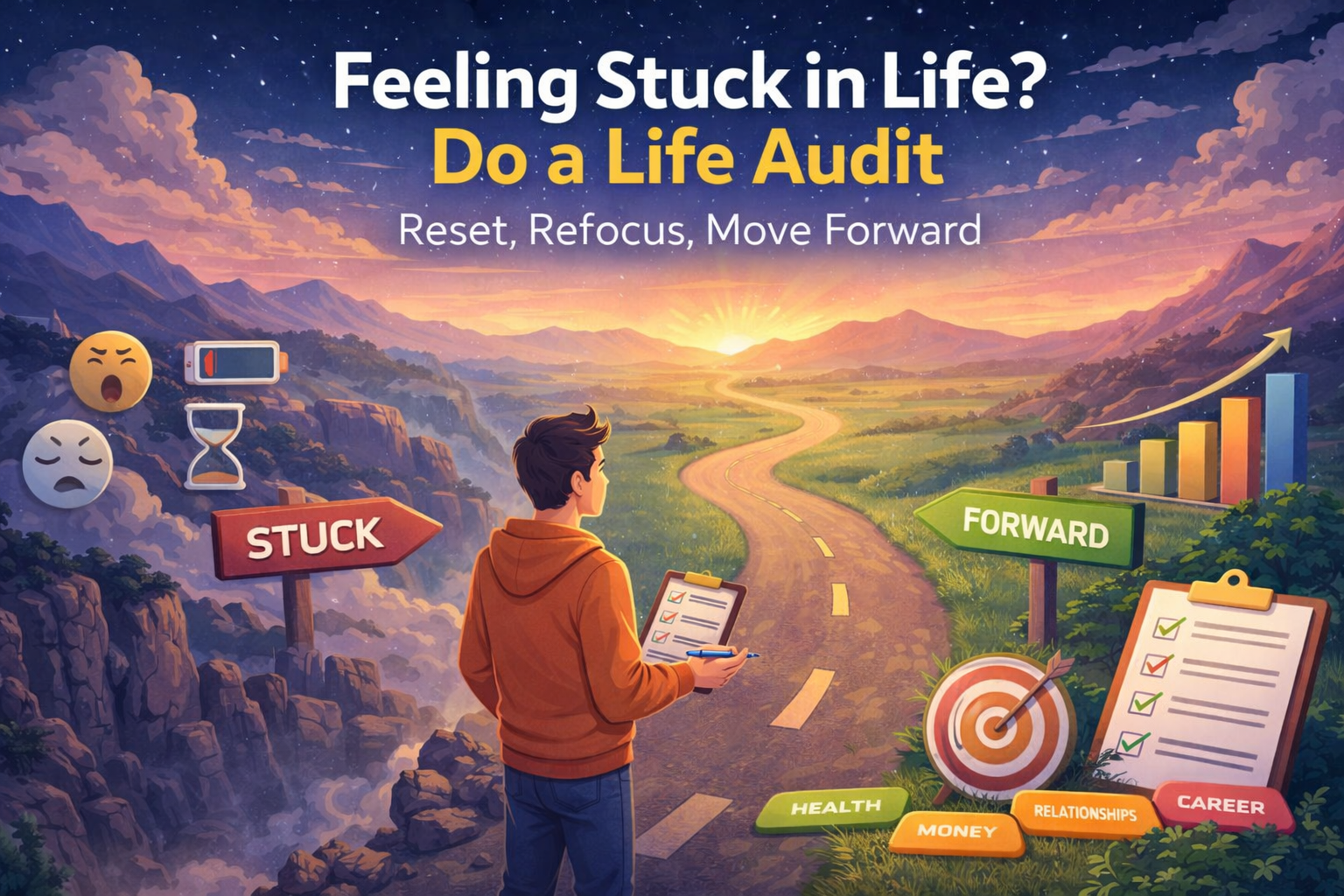
There are seasons in life when nothing looks obviously wrong from the outside, yet something feels deeply off on the inside.
You may still be working, paying bills, replying to messages, showing up for responsibilities, and doing everything expected of you, but beneath the routine there is a steady feeling that you are no longer connected to your own direction.
Days keep passing, effort keeps happening, and still you feel stuck.
This experience is more common than people admit. Many high-functioning people live in this exact state for years. They are productive enough to survive, but disconnected enough to feel lost.
If that sounds familiar, you may not need a dramatic reinvention. You may need a life audit.
A life audit is one of the most practical ways to understand where you are, why you feel stuck, and what needs to change. It helps you stop drifting through life on autopilot and start making choices with clarity again.
If you have been wondering how to reset your life, regain motivation, or move forward with purpose, this process can become a turning point.
What Is a Life Audit?
A life audit is a structured review of the major areas of your life so you can honestly assess what is working, what is draining you, and where change is needed.
Think of it as a personal review meeting, but instead of checking business metrics, you are checking the quality of your own life.
You examine areas such as health, finances, relationships, career, habits, mindset, emotional well-being, and long-term direction. Instead of relying on feelings alone, you look at patterns, behaviors, choices, and outcomes.
Most people try to solve life problems without first understanding the full picture. That often leads to random goals, temporary motivation, and repeated frustration. A life audit creates clarity before action.
That matters because clarity saves years.
Why So Many People Feel Stuck in Life
Feeling stuck rarely comes from laziness or lack of talent. More often, it comes from living without reflection for too long.
People fall into routines that once made sense but no longer fit who they are now. Responsibilities pile up. Old habits remain in place. Energy gets spent on things that no longer matter. Small frustrations become a background noise so constant that they feel normal.
Eventually, life becomes maintenance mode.
You wake up tired, move through the day reacting to demands, and end the evening wondering where your time went. Then the cycle repeats.
This is why many people search for answers like how to get unstuck in life, how to reset your life, or why life feels empty even when things seem fine.
The issue is often not effort. The issue is lack of honest review.
1. A Life Audit Gives You Clarity on Where You Really Are
Many people live with vague dissatisfaction because they have never clearly defined what is bothering them.
They say they feel behind, overwhelmed, frustrated, or unmotivated, but those words are broad and emotionally loaded. They describe pain, not causes.
A life audit turns emotion into information.
You may discover that your exhaustion is linked to poor sleep and overloaded schedules rather than lack of discipline. You may realize that your financial stress is not caused by income alone, but by untracked spending and avoidance. You may notice that your motivation disappeared after spending years pursuing goals that no longer matter to you.
This kind of clarity can feel uncomfortable at first, but it is powerful. Once something becomes visible, it becomes manageable.
You cannot improve what you refuse to examine.
2. It Stops You From Living on Autopilot
Many adults are not consciously choosing their lifestyle. They are repeating it.
They follow habits formed years ago, keep schedules built around old priorities, and make decisions based on convenience rather than intention. Over time, autopilot living creates a strange emptiness because movement is happening without meaning.
A life audit interrupts that cycle.
It invites questions most people avoid:
Why am I spending my mornings this way?
Why do I keep saying yes to things I resent?
Why does my week feel full but unfulfilling?
Why am I chasing goals I no longer care about?
These questions are not negative. They are liberating.
The moment you question automatic patterns, you create the possibility of changing them.
3. It Aligns Your Daily Actions With Your Real Values
Most people can quickly list what matters to them. They say health, family, peace, growth, freedom, love, faith, purpose, or contribution.
But values are not proven by words. They are revealed by calendars, spending patterns, attention, and habits.
Someone may claim health matters while sleeping poorly, eating badly, and never moving their body. Someone may say family matters while giving every ounce of energy to work and none to connection. Someone may say growth matters while avoiding discomfort and postponing learning.
This mismatch creates internal tension. It feels like frustration, guilt, or restlessness.
A life audit helps you close that gap.
You begin reshaping daily behavior so it reflects what you genuinely care about. That is where peace often begins, not in getting more, but in living more honestly.
4. It Helps You Let Go of What No Longer Serves You
Growth often requires subtraction before addition.
Many people stay stuck because they keep carrying outdated parts of life that should have been released long ago. This can include draining friendships, commitments rooted in guilt, identity labels that no longer fit, habits that numb rather than heal, or goals borrowed from other people.
These things consume space.
They take emotional energy, time, focus, and mental bandwidth that could be invested elsewhere.
A life audit helps you recognize where your life has become crowded with things that no longer belong.
Letting go is not failure. It is maturity.
Sometimes progress is not about doing more. It is about removing what blocks movement.
5. It Prevents Burnout Before It Becomes a Breakdown
Burnout rarely appears overnight. It usually arrives through ignored signals.
You feel constantly tired. Small tasks feel heavier than they should. Motivation drops. Irritability increases. Joy becomes harder to access. You start fantasizing about escape instead of building a better rhythm.
Many people normalize these signs until something bigger happens.
A life audit functions like preventive maintenance.
It helps you notice where your energy is leaking through poor boundaries, overcommitment, lack of rest, unresolved stress, or constant digital overstimulation.
Once identified, you can make intelligent adjustments before collapse forces them on you.
This might mean changing workload expectations, reducing unnecessary obligations, protecting sleep, creating recovery time, or asking for support.
Burnout prevention is far easier than burnout recovery.
6. It Makes Goal Setting Realistic and Achievable
A lot of goals fail because they are built on fantasy rather than facts.
People say they will save money without knowing their spending habits. They commit to intense routines without considering their schedule. They chase career changes without assessing skills gaps. They promise transformation without understanding their starting point.
That creates a cycle of excitement followed by disappointment.
A life audit replaces fantasy with reality.
You understand your current finances, available time, strengths, weaknesses, emotional capacity, and practical constraints. That allows you to create goals that stretch you without setting you up to fail.
Instead of saying you will change everything this month, you create a path that can actually be sustained.
Realistic goals may look less dramatic, but they usually produce far better results.
7. It Gives You a Sense of Control Again
When life feels messy, everything blends together.
Stress mixes with regret. Pressure mixes with confusion. Desire mixes with fear. The result is emotional noise that makes action harder.
A life audit separates the mess into categories.
Your finances become one category. Health becomes another. Relationships become another. Career direction becomes another. Habits become another.
This matters because specific problems are easier to solve than vague overwhelm.
You may discover that not everything is broken. Some areas may be healthy already. Others may need moderate attention. One area may need a serious shift.
That perspective alone can calm the mind.
Even before major changes happen, structure creates relief. You now have a map instead of chaos.
How to Do a Life Audit Step by Step
A life audit does not need expensive tools, complicated systems, or dramatic rituals. It needs honesty and time.
Start by reviewing the main areas of life: health, relationships, finances, career, mindset, habits, environment, and future direction.
For each category, write what is going well, what feels draining, what you have been avoiding, and what needs improvement.
Look for repeating patterns. Notice where energy drops, where resentment builds, where progress stalls, and where joy still exists.
Then ask one powerful question for each area:
If nothing changed here for the next two years, would I be happy with that?
Your answers will reveal priorities quickly.
After that, choose one practical next step for each area that matters most. Not ten steps. One.
Maybe it is creating a budget. Maybe it is updating your CV. Maybe it is ending a draining commitment. Maybe it is improving sleep. Maybe it is booking therapy. Maybe it is learning a skill.
Clarity without action becomes another form of avoidance. Use what you learn.
How Often Should You Do a Life Audit?
A full life audit every three to six months works well for many people.
That timing gives enough distance to notice patterns while staying close enough to make course corrections early.
You can also do smaller monthly check-ins where you review energy, habits, progress, and emotional state.
Life changes. Priorities evolve. A life audit keeps your direction updated.
Common Mistakes People Make
One common mistake is turning reflection into self-criticism. The purpose is awareness, not punishment.
Another mistake is trying to overhaul everything at once. Massive change plans often collapse under their own weight.
Another is collecting insights and taking no action. Many people know exactly what needs to change but keep postponing discomfort.
The strongest approach is simple honesty followed by consistent action.
Final Thoughts: If You Feel Stuck, Start Here
Feeling stuck in life does not always mean you need a new city, a new partner, a new career, or a dramatic reinvention.
Sometimes you need to pause long enough to see clearly.
A life audit helps you understand where you are, what is draining you, what still matters, and what must change next. It turns confusion into direction and direction into movement.
You do not need to fix everything this week.
You need clarity first.
Then one honest decision.
Then another.
Then momentum returns.
If life has felt heavy, repetitive, or strangely disconnected lately, this may be the reset you have been looking for.