


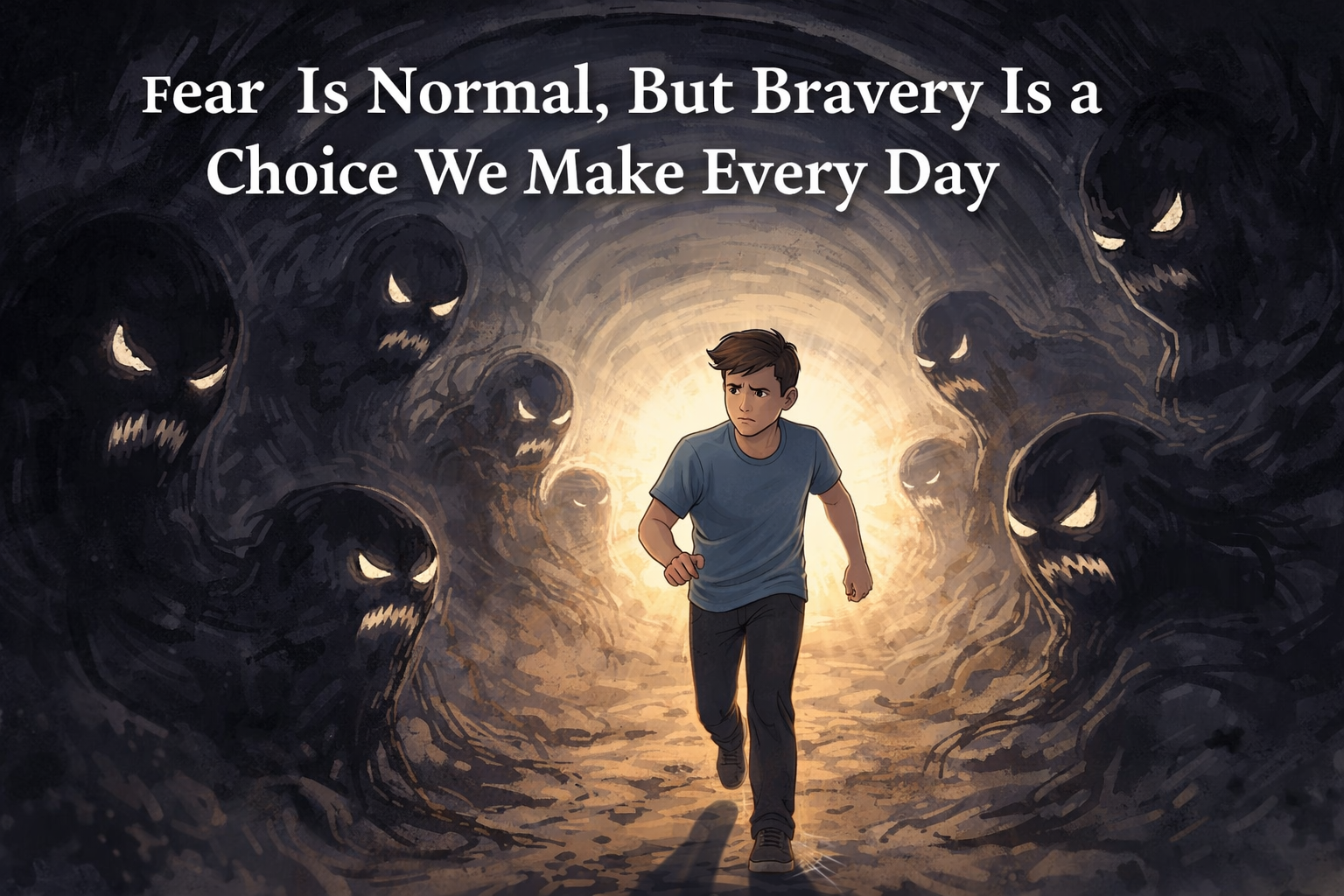
Fear has been misunderstood for generations, often treated like an enemy that must be defeated or eliminated before life can truly begin. Many people grow up believing that confident individuals move through the world without hesitation, doubt, or anxiety, while everyone else struggles behind the scenes wondering why courage never seems to arrive on time. This belief quietly damages self-trust, because the moment fear appears, people assume something is wrong with them instead of recognizing what fear actually represents.
Fear is not a flaw in human character. It is a survival response designed to protect us when we step into unfamiliar territory, face uncertainty, or risk rejection, failure, or loss. When your heart beats faster before speaking up in a meeting, starting a new relationship, changing careers, or standing up for yourself, that response is not weakness announcing itself. It is your brain doing exactly what it was designed to do, which is assess risk and keep you alert.
The problem begins when fear is mistaken for a stop sign rather than a signal. Fear was never meant to decide the direction of your life, yet many people allow it to quietly become the loudest authority in their choices. Over time, avoidance starts to feel safer than action, and comfort begins to replace growth without anyone consciously choosing it.
Bravery does not require the absence of fear. Bravery begins the moment fear shows up and you decide not to let it take control of your behavior.
Why Fear Shows Up Before Growth
Fear almost always appears before growth, not because something bad is about to happen, but because something unfamiliar is unfolding. Human beings are wired to seek certainty, predictability, and familiarity, even when those conditions keep them stuck in situations that no longer serve them. The brain prefers known discomfort over unknown possibility, because known discomfort can be anticipated and managed.
This is why people stay in jobs that drain them, relationships that no longer feel aligned, or routines that slowly dull their sense of purpose. Fear warns them about the uncertainty ahead, and instead of questioning whether the fear is reasonable, they obey it as if it were a command.
Fear does not measure your ability. It measures your attachment to certainty.
Every meaningful change involves stepping into territory where outcomes are not guaranteed, where approval is not assured, and where mistakes are possible. Fear rises in those moments because your identity, safety, or self-image feels temporarily unprotected. That response is human, predictable, and universal.
The difference between people who grow and people who remain stuck is not the presence of fear. It is the relationship they have with it.
Bravery Is Acting Confident Even When You Do Not Feel It
One of the biggest myths around confidence is that it must be felt before it can be expressed. People wait until they feel ready, calm, or certain before they speak, act, or decide, only to discover that readiness rarely arrives on its own. Confidence is not a prerequisite for action. Confidence is a byproduct of action repeated over time.
When someone appears confident while feeling afraid, they are not pretending in a dishonest way. They are choosing behavior that aligns with growth instead of surrendering to discomfort. Acting confident does not mean ignoring fear. It means acknowledging fear while refusing to let it dictate your posture, voice, or decisions.
This is why simple behaviors such as standing upright, making eye contact, slowing your breathing, and speaking clearly can shift your internal state. The brain responds to behavior as much as it responds to thoughts. When you act with intention, your nervous system begins to receive signals that you are capable of handling the moment, even if the fear has not disappeared.
Over time, these moments accumulate into evidence. Evidence that you survived discomfort. Evidence that fear did not destroy you. Evidence that action was possible even without certainty. This evidence becomes the foundation of genuine confidence.
Brave Actions Build Real Confidence Over Time
Confidence does not arrive as a personality trait that some people are lucky enough to possess. It is built gradually through lived experience, especially through moments that once felt intimidating but later became manageable. Every time you face something uncomfortable and move forward anyway, your self-trust strengthens.
Small brave actions matter more than dramatic gestures. Answering a question when your voice shakes, introducing yourself in a room where you feel out of place, trying again after failure, or having a difficult conversation you would normally avoid all contribute to confidence far more than waiting for the perfect moment.
Confidence grows through repetition, not perfection.
Each brave choice sends a message to yourself that you are capable of navigating discomfort without falling apart. Over time, fear begins to lose its authority, not because it vanishes, but because you stop treating it as a warning that something is wrong with you.
The people who seem fearless are often those who have simply faced fear enough times to recognize it as temporary and manageable. Their confidence is not loud or flawless. It is grounded in experience.
Confidence Can Be Practiced Like Any Other Skill
Many people believe confidence is something you either have or you do not, which keeps them waiting instead of practicing. In reality, confidence behaves like a skill that improves through deliberate use. It develops through behavior before it becomes a feeling.
Practicing confidence means choosing actions that align with self-respect even when discomfort is present. It means speaking clearly even when your heart is racing, holding your ground even when you fear disapproval, and making decisions even when outcomes are uncertain.
When you act confidently, your brain begins to associate those behaviors with safety rather than threat. Over time, fear loses intensity because your nervous system learns that discomfort does not equal danger.
This is why people who consistently practice confident behavior begin to feel calmer in situations that once overwhelmed them. Their confidence is not an illusion. It is the result of repeated exposure paired with self-trust.
Bravery Is a Decision, Not a Personality Trait
Bravery is often romanticized as something people are born with, as if courage is a genetic advantage rather than a daily choice. In reality, bravery is decided moment by moment, usually in private, often without applause, and almost always alongside fear.
When fear appears, there are two paths available. One leads toward avoidance, retreat, and familiarity. The other leads toward action, uncertainty, and growth. Bravery is choosing the second path even when the first feels safer.
This choice does not require confidence to exist beforehand. It requires willingness. Willingness to experience discomfort without letting it define you. Willingness to try again even after disappointment. Willingness to move forward without guarantees.
Fear may remain present, but the decision to act changes the power dynamic. Instead of fear controlling your behavior, your values take the lead.
Bravery Is Progress, Not Perfection
Bravery is not measured by flawless execution or constant success. It is measured by persistence when things do not go as planned. Growth rarely looks clean or impressive in real time. It looks like uncertainty, setbacks, self-doubt, and moments where progress feels painfully slow.
Many people give up not because they lack ability, but because they mistake imperfection for failure. They believe bravery should feel empowering at all times, and when it feels uncomfortable, they assume they are doing something wrong.
In truth, discomfort often signals that growth is happening.
Bravery means continuing even when confidence fluctuates. It means adjusting rather than quitting. It means learning instead of retreating. Progress happens one courageous step at a time, not through dramatic leaps, but through consistent movement forward.
Each step strengthens your capacity to face future challenges with greater resilience. Each moment of choosing action over avoidance adds to your internal foundation.
Choosing Action Over Avoidance Changes Everything
Avoidance offers short-term relief, but it carries long-term costs. Each time fear prevents action, it reinforces the belief that you are incapable of handling discomfort. Over time, this belief limits possibilities, shrinks confidence, and strengthens fear’s influence.
Action, even imperfect action, interrupts that cycle. It replaces avoidance with evidence. Evidence that fear can coexist with movement. Evidence that discomfort does not last forever. Evidence that you are stronger than your doubts suggest.
When you accept fear as a normal part of growth and choose action anyway, you begin to reclaim agency over your life. You stop waiting for courage to arrive and start creating it through experience.
Final Reflection
Fear will always be part of the human experience, especially when growth, change, or vulnerability are involved. The goal is not to eliminate fear, but to stop allowing it to decide your future. Bravery lives in the moments when fear is present and action still happens.
Confidence is not something you wait for. It is something you build. One decision. One action. One uncomfortable step at a time.
And each time you choose to move forward despite fear, you remind yourself of something deeply important. You are capable. You are resilient. And you are allowed to grow without having everything figured out first.