


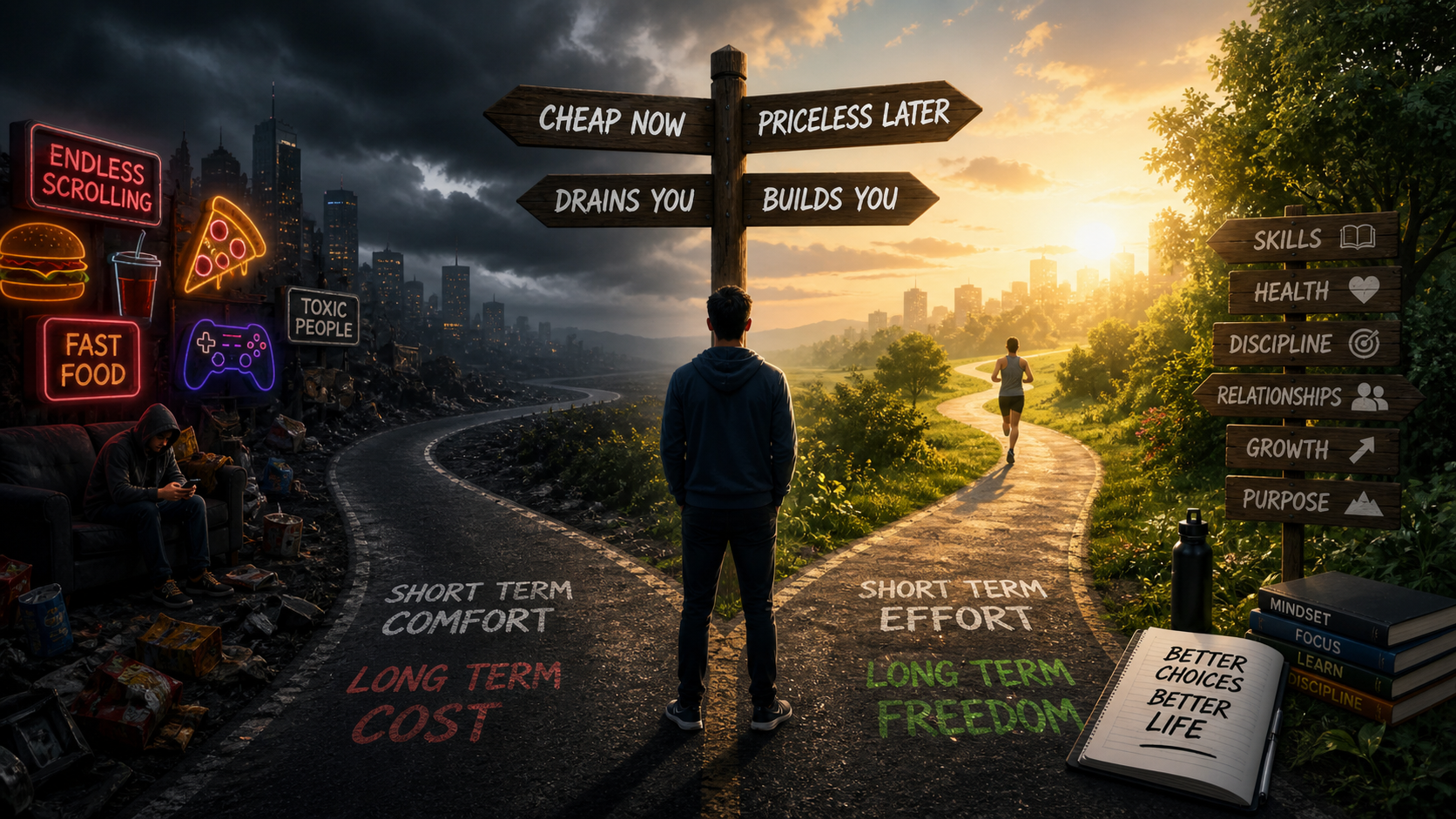
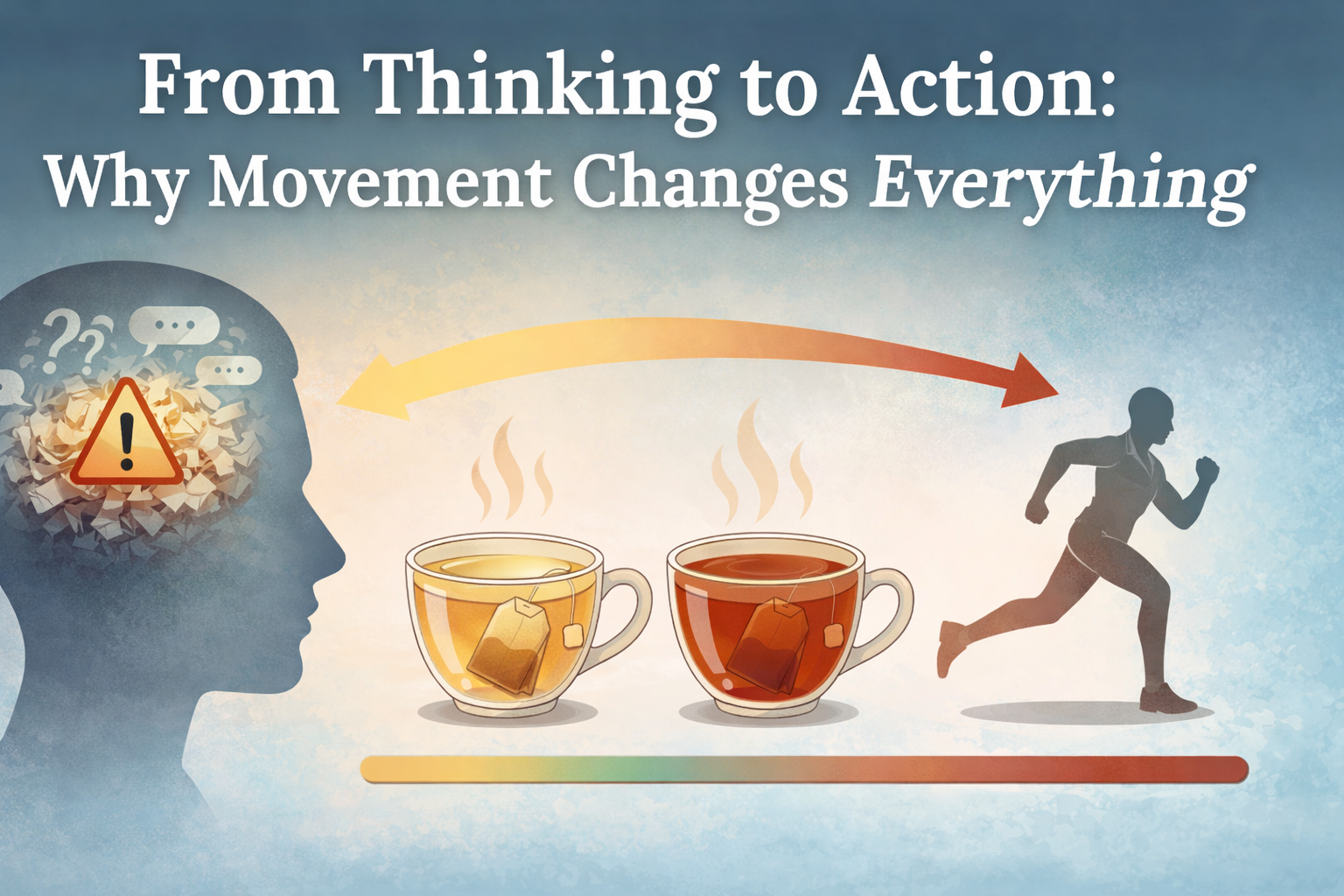
There is a strange comfort in thinking. It feels productive. It feels responsible. It even feels intelligent. Sitting with ideas, weighing possibilities, imagining outcomes, and planning next steps can easily give the illusion of progress. Yet, if you step back and observe your own life patterns, a different truth begins to emerge. Progress does not come from thinking alone. It comes from movement.
Most people do not struggle because they lack ideas or intelligence. They struggle because they remain stuck in a loop of thinking that never converts into action. That loop slowly drains energy, confidence, and clarity. What begins as careful planning quietly transforms into hesitation, doubt, and eventually stagnation. The gap between intention and execution becomes wider with every passing day.
This is where the real shift needs to happen. Not in what you think, but in what you do.
The Illusion of Productive Thinking
Thinking has its place. It helps you analyze situations, understand risks, and prepare mentally for what lies ahead. Without thinking, action becomes reckless. However, thinking starts becoming a problem when it turns into a substitute for action rather than a preparation for it.
Many people spend hours, days, or even years refining plans that never get executed. They keep waiting for the perfect time, the perfect clarity, or the perfect confidence. The reality is far less glamorous. Perfection rarely arrives before action. In fact, action is what creates clarity.
The mind, when left unchecked, tends to create scenarios that amplify fear. It starts asking endless questions. What if this fails. What if I am not ready. What if people judge me. What if I make the wrong decision. These questions do not lead to better decisions. They lead to paralysis.
At that point, thinking is no longer serving you. It is holding you back.
Why Overthinking Drains Your Energy
Overthinking is not just a mental habit. It is an energy leak. Every repeated thought consumes attention and emotional bandwidth. When the same thought cycles through your mind again and again without resolution, it begins to create fatigue.
This fatigue shows up in subtle ways. You feel mentally exhausted without having done any meaningful work. You find it harder to make decisions. Even simple tasks start to feel overwhelming. Confidence drops because no action is being taken to reinforce it.
The irony is that the more you think without acting, the harder it becomes to act. The mind starts associating action with risk and discomfort, while associating thinking with safety. Over time, this creates a default pattern where you keep retreating into thought instead of stepping into action.
Breaking this pattern requires awareness. You need to recognize when thinking has crossed the line from preparation into avoidance.
Action as the Source of Clarity
Clarity is often misunderstood. Many people believe clarity comes before action. In reality, clarity is often the result of action.
When you take a step, even a small one, you get feedback. That feedback tells you what works and what does not. It helps you adjust your direction. It reduces uncertainty because you are no longer guessing. You are experiencing.
Consider any major decision in life. Changing careers, starting a business, learning a new skill, or even improving health habits. No amount of thinking can fully prepare you for the reality of these actions. The real understanding comes only when you begin.
Action simplifies complexity. It cuts through mental noise. It replaces hypothetical fears with real data. It transforms vague ideas into tangible outcomes.
This is why small steps matter. They create momentum. They build confidence. They reduce the gap between where you are and where you want to be.
The Cost of Waiting for the Perfect Moment
Waiting feels safe. It gives you time to prepare, to think, to plan. But waiting often becomes a trap. The perfect moment you are waiting for rarely arrives in the way you expect.
Life does not operate on ideal conditions. There will always be uncertainty, incomplete information, and some level of risk. If you keep waiting for everything to align perfectly, you will spend a large part of your life standing still.
What makes this even more dangerous is that waiting can feel justified. You can convince yourself that you are being cautious or strategic. In reality, you may simply be avoiding discomfort.
Every opportunity has a window. The longer you wait, the more that window closes. Not always because the opportunity disappears, but because your mindset shifts. Fear grows stronger, confidence weakens, and the starting point begins to feel further away.
At some point, the cost of inaction becomes greater than the risk of action.
The Role of Imperfect Action
There is a common misconception that action must be significant to matter. This belief stops many people from starting because they feel their first step is too small or not impactful enough.
In reality, progress is built on imperfect action. Small, consistent steps accumulate over time. They create a foundation that larger actions can build upon.
Perfection is not required to start. In fact, striving for perfection at the beginning often delays progress. What matters is direction, not perfection.
When you act, even imperfectly, you begin to learn. You start to understand what works in your specific context. You develop skills through experience rather than theory. Most importantly, you build a habit of moving forward.
That habit becomes your greatest asset.
Shifting from Thinking to Doing
The shift from thinking to doing is not about eliminating thinking altogether. It is about setting boundaries for it.
You need to decide when thinking has done its job. Once you have enough information to take the next step, further thinking adds little value. That is the moment to act.
One practical way to approach this is to define a clear next step. Not a long-term goal, but a specific action you can take immediately. This reduces overwhelm and makes it easier to start.
For example, instead of thinking about starting a new project, focus on the first task required to begin. Instead of planning an entire transformation, focus on one action you can take today.
This approach simplifies decision-making. It removes unnecessary complexity. It helps you move from intention to execution without getting stuck in analysis.
Building Momentum Through Action
Momentum is a powerful force. Once you start moving, it becomes easier to keep going. The hardest part is often the beginning.
Action creates momentum because it changes your state. It shifts you from thinking mode into execution mode. It reduces resistance because you are no longer starting from zero.
Each action builds on the previous one. Confidence grows because you are proving to yourself that you can take action. Fear reduces because you are gaining experience.
Over time, this creates a positive cycle. Action leads to results. Results reinforce action. The gap between thinking and doing becomes smaller.
This is how progress becomes sustainable.
The Balance Between Thinking and Action
It is important to understand that thinking itself is not the problem. The problem lies in imbalance.
Too little thinking leads to impulsive decisions. Too much thinking leads to inaction. The goal is to find a balance where thinking supports action rather than replacing it.
Use thinking as a tool for direction. Use action as a tool for progress.
When you think, focus on clarity. When you act, focus on execution. Do not let one replace the other.
This balance allows you to move forward while still making informed decisions. It keeps you grounded while ensuring you do not remain stuck.
Recognizing When You Are Stuck
Self-awareness plays a critical role in breaking the cycle of overthinking. You need to recognize the signs that indicate you are stuck in thinking mode.
If you notice that you are revisiting the same thoughts repeatedly without reaching a decision, that is a clear signal. If you feel mentally drained without having taken any action, that is another sign. If you keep delaying tasks while convincing yourself you need more preparation, that is also an indicator.
Once you recognize these patterns, you can interrupt them. You can consciously choose to act instead of continuing to think.
This shift requires discipline. It requires you to accept that action may feel uncomfortable at first. But that discomfort is temporary. The progress that follows is lasting.
Confidence Comes After Action, Not Before
One of the biggest misconceptions people have is that they need to feel confident before they take action. This belief holds them back because confidence is often a result of action, not a prerequisite for it.
When you act, you gain experience. That experience builds competence. Competence leads to confidence.
Waiting for confidence before acting creates a loop where you never begin. Acting despite uncertainty breaks that loop.
This is why small actions are so powerful. They allow you to build confidence gradually. They reduce the pressure of taking a large leap. They make progress feel achievable.
Over time, these small actions compound into significant change.
Turning Insight Into Habit
Understanding the importance of action is one thing. Turning it into a habit is another.
Habits are built through repetition. The more you practice taking action despite uncertainty, the more natural it becomes. Over time, your default response shifts from thinking to doing.
This does not mean you stop thinking. It means thinking becomes purposeful and time-bound. It supports your actions rather than delaying them.
To build this habit, start small. Focus on consistency rather than intensity. Take one action each day that moves you closer to your goal. Over time, this creates a rhythm.
That rhythm becomes your new normal.
Final Thoughts
Progress is not a product of perfect plans or endless preparation. It is the result of movement. Every meaningful change in life begins with a step, often taken before you feel fully ready.
Thinking has its place, but it should never become a substitute for action. When thinking turns into hesitation, it starts working against you. When action follows thinking, it creates momentum.
The difference between those who move forward and those who remain stuck is rarely intelligence or talent. It is the willingness to act despite uncertainty.
If you find yourself stuck in a loop of thinking, take it as a signal. Not to think more, but to move.
Because in the end, progress does not begin when everything is clear. It begins the moment you decide to take a step.