





The Frog and the Two Pots of Water
There is an old fable about a frog and two very different encounters with a pot of water.
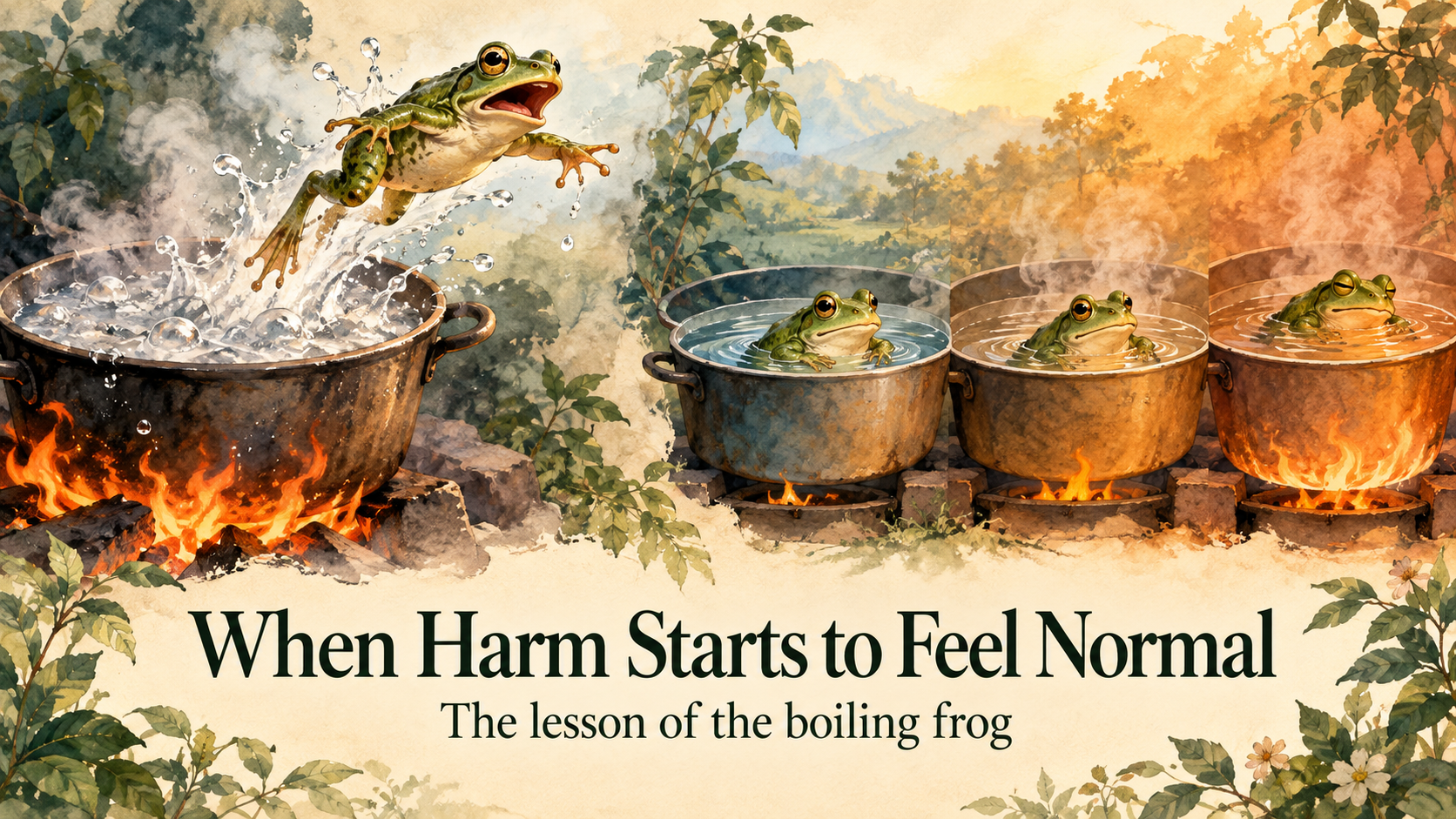
In the first situation, a frog is dropped into water that is already boiling. The moment it touches the water, the heat is impossible to ignore. The danger is immediate and unmistakable, so the frog reacts at once, using its strength to leap out of the pot.
The second situation begins very differently. This time, the frog is placed in a pot of cool water, where it can float comfortably. Nothing about its surroundings seems threatening, and there is no obvious reason for it to leave.
Beneath the pot, a small flame is lit, and the water begins to warm. The change is gradual, so the frog adjusts to the new temperature and continues floating. A little later, the water becomes warmer still, and once again the frog adapts.
As the heat rises, remaining in the pot takes more effort. The frog continues adjusting because each change seems only slightly different from the one before it. What was once comfortable has become unpleasant, but there has been no sudden moment of danger to demand an immediate response.
Eventually, the water becomes unbearably hot. According to the fable, the frog tries to escape, but it has already used so much of its strength adapting to the rising temperature that it can no longer leap out.
The contrast between the two situations is what gives the story its meaning. In the first pot, the danger is obvious enough to provoke an immediate reaction. In the second, the danger develops so gradually that the frog keeps adjusting until its ability to escape is diminished.
The Things That Change by Degrees
Most of us like to imagine that we would recognise a harmful situation and know when to walk away. If someone treated us badly from the first day, if a job immediately demanded every hour of our lives, or if a habit caused visible damage overnight, the need to act might be easier to recognise.
Yet many of the situations that drain us do not begin that way. They enter our lives carrying something we want or need, whether that is a promising opportunity, a loving relationship, financial security, or a sense of belonging.
The difficult parts may arrive later, when we have already invested our time, made commitments, and built our routines around what once felt right.
A job might begin with an occasional late evening during an unusually busy week. You stay because you want to help your colleagues, and perhaps you feel proud that your manager trusts you with the responsibility. When another deadline arrives, you stay late again, telling yourself that this is simply what the work requires for now.
Months later, your evenings are no longer your own, and you find yourself checking messages while eating dinner or thinking about tomorrow’s meetings when you should be sleeping.
Because you have adjusted one week at a time, it can be difficult to see how far you have travelled from the life you expected to have.
Relationships can change in much the same way. A dismissive comment is followed by an apology, a broken promise comes with a reasonable explanation, and a difficult conversation is postponed because the other person has had a stressful day.
You tell yourself that every relationship requires patience, and there is truth in that. What deserves attention is whether your patience has gradually become an expectation that you will accept being hurt.
When Coping Becomes a Way of Life
Human beings are remarkably capable of adapting. We find ways to continue through demanding periods, learn unfamiliar responsibilities, and carry more than we once believed possible. That ability can help us through grief, uncertainty, illness, and the many challenges that life places before us.
Adaptation can also make it harder to notice when something needs to change. If you have learnt how to manage an overwhelming workload, avoid an argument, or function on too little rest, the fact that you are coping may begin to look like evidence that the situation is acceptable.
You might become the person who always stays late, who knows how to keep the peace, or who never asks anyone else for help. Other people may even praise you for being dependable and strong, unaware of how much effort it takes to remain that way.
Meanwhile, the cost appears in places that are easy to overlook. You stop making plans because you are too tired to enjoy them, lose interest in things that once gave you pleasure, or begin feeling anxious whenever your phone lights up. You may still be doing everything expected of you, but there is less and less of your life that feels like it belongs to you.
Because these changes occur slowly, you may describe them as ordinary tiredness or assume that this is simply what adulthood demands. Some demanding seasons are unavoidable, but a life built entirely around enduring the next difficulty deserves a closer look.
What We Call Normal Is Not Always Healthy
When a situation continues for long enough, we begin to organise ourselves around it. We learn which topics are best avoided, which requests will be dismissed, and which hours of the day we are most likely to be interrupted. We become skilled at anticipating discomfort, even if we no longer notice how much attention it requires.
Our language often reflects this adjustment. We say that a manager is “just demanding,” that someone “doesn’t mean anything by it,” or that we “have always been the anxious one.” These explanations may contain a little truth, but they can also stop us from asking whether the situation could be different.
A person who has spent years being criticised may begin to believe they are naturally indecisive, even though they once trusted their own judgement. Someone who feels exhausted by constant demands may call themselves lazy because they no longer have energy for the things they used to enjoy.
Over time, we can become so familiar with ourselves under pressure that we forget who we are when we feel supported. We may mistake the habits we developed to survive a difficult situation for permanent parts of our character.
It can be helpful to look back at the person you were before the pressure became constant. What did you enjoy? Who did you spend time with? How easily did you speak about what you needed? The answers may help you notice changes that happened gradually enough to escape your attention.
Why People Stay in Difficult Situations
The lesson of the boiling frog should never be used to judge someone for staying. Human circumstances are far more complicated than a simple story, and recognising a problem does not mean that leaving it will be easy.
A person may know that their job is affecting their health while also knowing that their family depends on the income. Someone may recognise that a relationship has become harmful while facing financial worries, shared responsibilities, or uncertainty about where they could live. Others may still love the person who hurts them and hope that the kindness they once knew will return.
There is often a great deal happening beneath a decision that looks obvious from the outside. People weigh consequences, protect those who depend on them, and make the best choices they can with the resources available at the time.
There can also be shame in admitting that a situation has become worse. You may have told friends how happy you were, defended a person’s behaviour, or worked hard to reach a position that now makes you unhappy. Acknowledging that something needs to change can feel like admitting that the sacrifices you made did not lead where you hoped they would.
The kinder question is not why someone failed to leave sooner, but what might help them find more choices now. Support, time, information, and practical resources can make a difference when a person is trying to understand their circumstances and decide what to do next.
Look at the Pattern, Not Only the Latest Incident
One difficult day does not always reveal the full truth of a situation. A stressful week at work may pass, an argument can lead to a better understanding, and people can make mistakes that they sincerely work to correct.
Patterns become clearer when we look beyond the latest incident and consider what has been happening over time. Have the same concerns been raised repeatedly without lasting improvement? Do promises lead to different behaviour, or do they offer temporary comfort before everything returns to the way it was?
You might notice that you are regularly sacrificing sleep to meet expectations that continue to grow. You may find yourself avoiding conversations because experience has taught you that your feelings will be dismissed. Perhaps you have stopped sharing good news with someone because their response leaves you feeling smaller than before.
Writing down your experiences can help you see them more clearly, particularly when you have become accustomed to explaining them away. You do not need to create a case against anyone or reach an immediate conclusion. The purpose is to give yourself an honest account of what is happening, how often it happens, and how it affects you.
It can also help to speak with someone you trust. A friend may notice how much your circumstances have changed, while a colleague may confirm that the demands placed on you are unreasonable. Another person cannot make the decision for you, but their perspective may help you hear your own concerns with greater clarity.
You Do Not Have to Wait Until Everything Falls Apart
Many people wait for a breaking point because they believe that a problem must become severe before they are allowed to act. They tell themselves that they can manage another month, tolerate another disappointment, or continue until a particular deadline has passed.
There is always a reason to wait when you have become accustomed to putting your needs last. You may worry that other people will think you are ungrateful, that you are giving up too soon, or that your concerns are not serious enough compared with someone else’s.
Yet a situation does not have to become unbearable before it deserves attention. You can ask for a more manageable workload while you still have the energy to discuss it. You can address a recurring problem in a relationship before resentment has taken over every conversation. You can seek help for exhaustion before it becomes difficult to get through the day.
Acting earlier gives you more room to consider your options. It may allow you to have a thoughtful conversation, gather information, or make a gradual plan instead of being forced to make a decision when you are already depleted.
Change will look different in every situation. For one person, it may begin with setting a boundary around working hours. For another, it may involve speaking to a counsellor, saving money, exploring new opportunities, or asking a trusted friend for support.
The first step does not need to solve everything, but it can help you move from simply enduring the situation towards considering what you want to do about it.
Pay Attention to the Temperature of Your Own Life
The boiling frog fable asks us to think about the things we adjust to without noticing the cost. Some adjustments help us grow, while others ask us to surrender more of ourselves each time we make them.
The signs may be found in the small details of an ordinary week. Perhaps you feel relieved when plans are cancelled because you have no energy left, or perhaps you spend Sunday afternoon worrying about Monday morning. You might notice that you rehearse your words before speaking at home, or that you have not done something you love in so long that you cannot recall when it disappeared from your routine.
These details are worth listening to. They may not provide a complete answer on their own, but together they can reveal the direction in which your life is moving.
You do not need to make every decision today, and you do not need to know exactly what the future will look like before acknowledging that something feels wrong. Sometimes the beginning of change is simply allowing yourself to say that a situation has become harder than you want it to be.
From there, you can ask for help, explore your options, and take the next step that is possible for you. A life that has gradually become narrower can begin to open again through choices that make room for your wellbeing, your relationships, and the parts of yourself you may have been missing.
The frog in the fable reacted immediately when the danger was obvious, yet kept adjusting when the heat rose gradually. We can honour the lesson by looking at the whole picture, recognising when endurance has become too costly, and giving ourselves permission to seek a different way of living.