
Most people think life changes through dramatic moments. A new job, a breakup, a promotion, a health scare, a sudden burst of motivation inhttps://desibanjara.com/wp-admin/edit.php January. Those moments matter, but they are not where life is usually built or broken.
Life is shaped far more often by ordinary choices that seem too small to notice.
The meal you choose when nobody is watching.
The way you spend an hour after work.
The people you text when you feel low.
The habit you repeat when stressed.
The excuse you make for yourself one more time.
The decision to begin something useful or postpone it again.
These choices rarely feel powerful in the moment. That is why they are dangerous. Small decisions often arrive wearing harmless clothes.
Many people focus only on the visible cost of a choice. They think in pounds, dollars, convenience, time, or effort. But there is another cost that matters more: the emotional, mental, physical, and future cost attached to repeated behaviour.
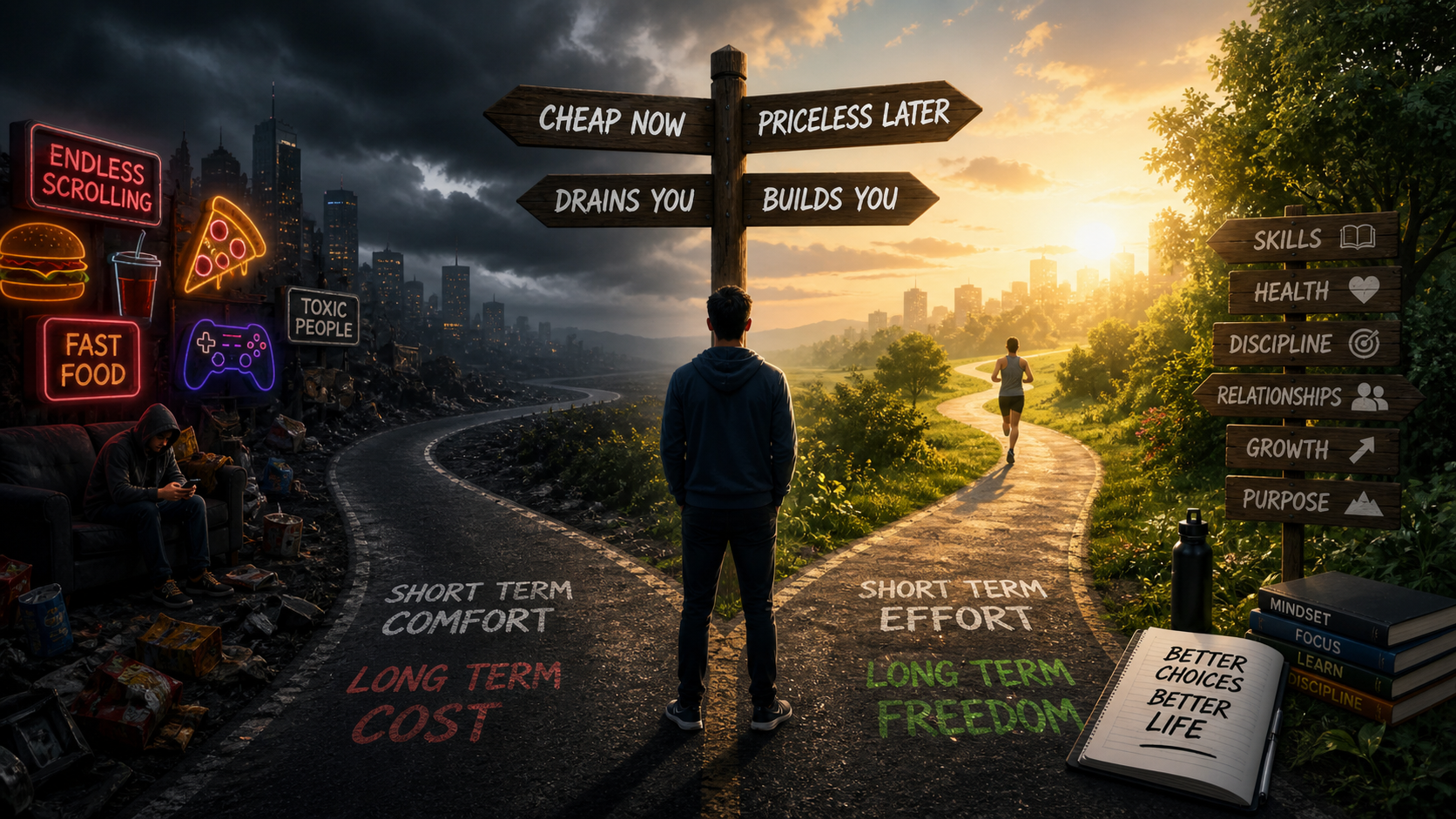
Some habits are cheap today but expensive tomorrow. Others feel costly now but become life-changing investments later.
That is where many people get trapped.
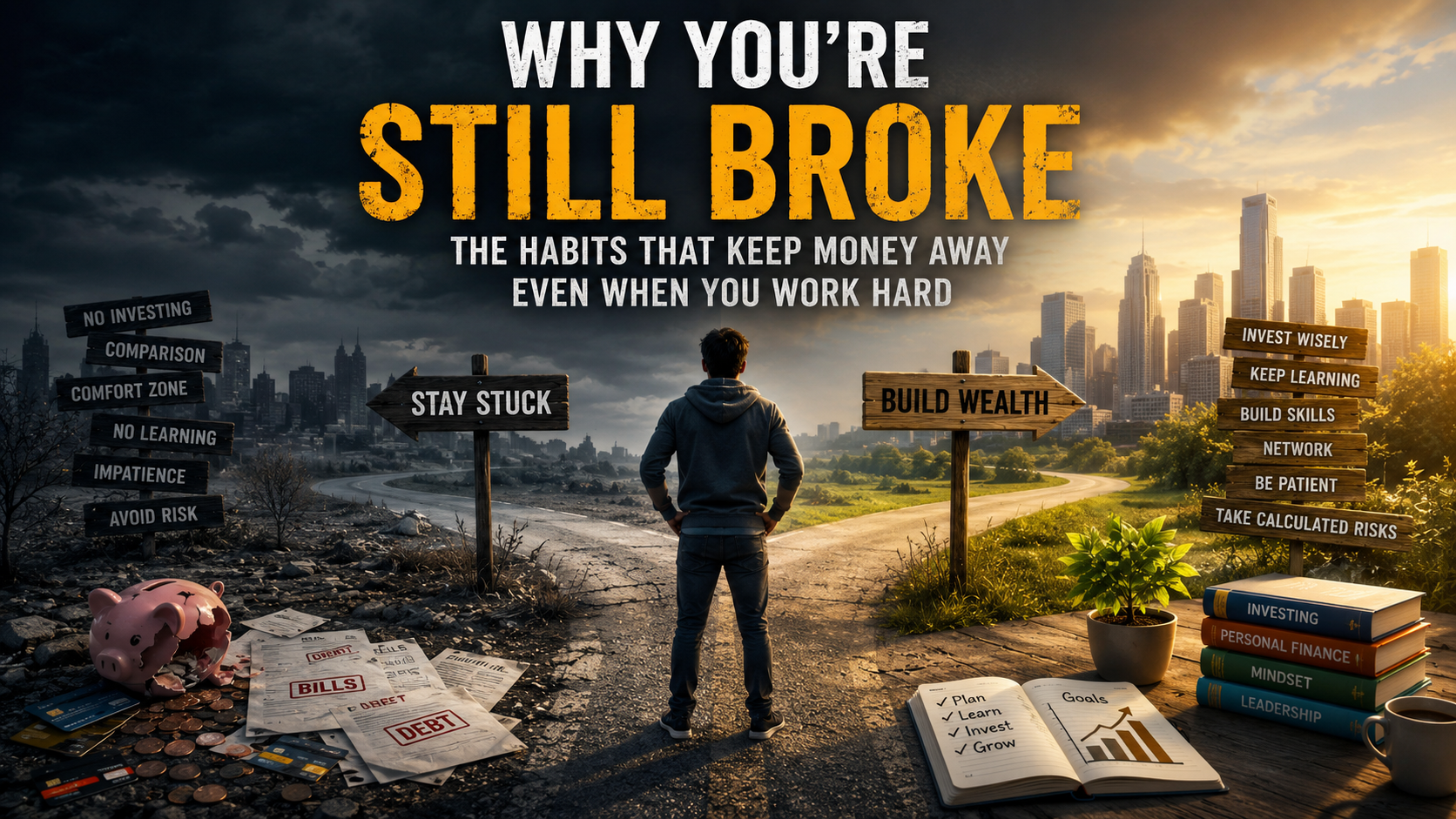
Cheap Today, Expensive Later
Modern life sells convenience like it is freedom. It tells you that faster is better, easier is smarter, and comfort is success. Sometimes that is true. Often it is a polished lie.
Fast food saves time tonight, but repeated poor nutrition can slowly damage energy, mood, sleep quality, and long-term health. Endless scrolling feels free, but it often steals attention, confidence, and presence. Staying up late because the day felt unsatisfying can feel like reclaiming control, but it usually creates a more exhausted tomorrow.
These habits look affordable because the invoice does not arrive immediately.
That is how damage sneaks in.
Nobody eats one unhealthy meal and sees disaster. Nobody scrolls for one hour and loses their future. Nobody delays sleep once and collapses their wellbeing. The issue is repetition. What hurts you quietly over time often begins as something that seemed minor.
This applies beyond health.
Avoiding hard conversations feels easier today. Ignoring feedback protects the ego for a moment. Refusing to learn new skills can preserve comfort. Staying in circles that normalize mediocrity can feel socially safe.
But the long-term cost can be massive.
You lose growth while thinking you are preserving peace.
Expensive Today, Valuable Later
Now consider the opposite category: choices that feel costly now but create a better future.
Skill-building often demands money, patience, discomfort, and humility. Learning something new can feel frustrating because beginners are clumsy. Joining a course, hiring a coach, reading serious books, or practicing after work can feel tiring when entertainment is available in one tap.
Exercise costs effort. Healthy food can cost planning. Therapy can cost money and emotional honesty. Good sleep can cost late-night stimulation. Saying no to draining people can cost approval.
These choices often feel expensive because they require sacrifice in the present.
But many of them generate returns for years.
A stronger body supports confidence, productivity, and resilience. A valuable skill can increase income and independence. Better sleep improves mood, judgement, discipline, and physical health. Emotional healing can transform relationships and reduce patterns that once felt permanent.
The cost is real, but it is an investment rather than a leak.
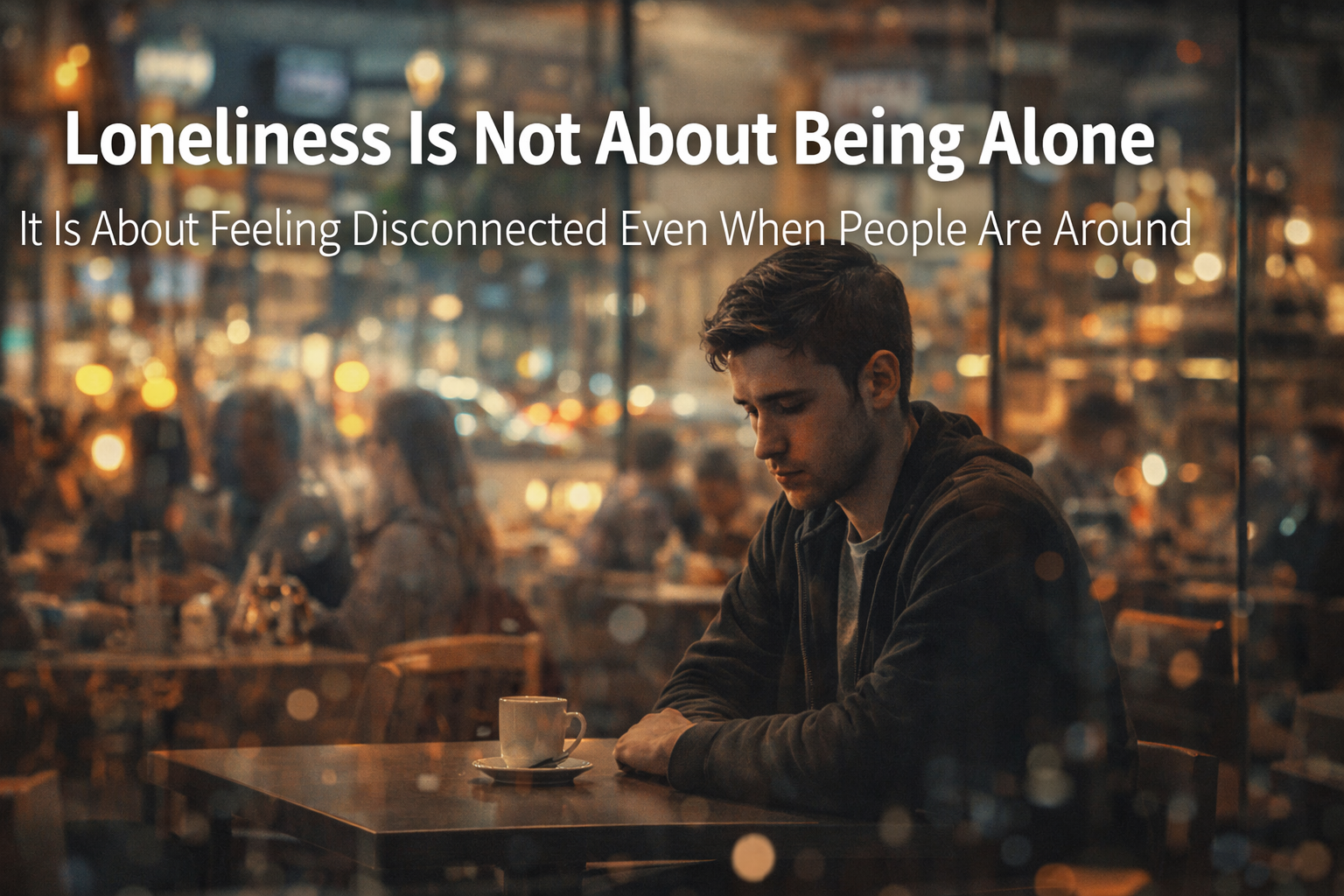
The Drain Nobody Talks About
Not all harmful choices destroy finances or health immediately. Some simply drain you.
This type of cost is subtle and dangerous because it is harder to measure.
You may spend hours around negative people and wonder why your motivation dies. You may constantly compare yourself online and feel strangely dissatisfied. You may tolerate environments where you shrink yourself to keep others comfortable. You may keep saying yes when your body wants rest.
Nothing dramatic happens in one day.
But slowly your mind becomes heavier. Your enthusiasm lowers. Your spark fades. You start believing something is wrong with you, when the real problem is repeated exposure to draining habits and environments.
Many people try to solve exhaustion with motivation. What they often need first is subtraction.
Less chaos.
Less noise.
Less fake urgency.
Less self-betrayal.
Less access for things that drain them.
Energy management is life management.
Why People Keep Choosing What Hurts Them
If unhealthy choices are so costly, why do intelligent people keep making them?
Because humans are not designed to automatically choose what is best long term. We are wired to respond to what feels rewarding now.
Sugar gives quick pleasure. Avoidance gives immediate relief. Entertainment offers easy stimulation. Complaining creates temporary bonding. Procrastination removes present discomfort.
The brain loves short-term rewards.
Future consequences are abstract. Present comfort is tangible.
That is why discipline matters. Not as punishment, but as protection. Discipline is the bridge between what feels good now and what will actually be good later.
Without that bridge, people become loyal to moods instead of goals.
The Trap of Looking Rich While Living Poorly
Many people spend heavily on appearance while underinvesting in reality.
They buy status symbols but ignore health. They spend on distractions but not development. They pay for temporary validation while refusing tools that would genuinely improve their life.
There is nothing wrong with enjoyment or nice things. The issue is imbalance.
If someone spends hundreds monthly on habits that numb them but says books, training, or therapy are “too expensive,” they are not making a financial decision. They are revealing priorities.
The same pattern happens with time.
Hours vanish into gossip, passive consumption, resentment, and avoidance, while meaningful work is delayed because there is “no time.”
Often the problem is not lack of resources. It is resource allocation.
Cheap Habits That Build Wealth
Not every positive choice requires money.
Some of the highest-return habits are surprisingly inexpensive.
Walking daily improves mood, mobility, and mental clarity. Reading regularly compounds knowledge. Writing your thoughts reduces emotional clutter. Reaching out to people deepens relationships. Keeping consistent sleep habits can improve almost every area of functioning. Spending time in genuine community protects mental wellbeing more than many people realise.
These habits do not look glamorous.
They rarely get applause online.
But they create stable lives.
Many people underestimate simple practices because they are simple. Complexity often feels smarter than consistency. It usually is not.
How to Audit Your Own Choices
A powerful question to ask is this:
What is this habit costing me beyond money?
Ask it honestly.
What is late-night chaos costing your mornings?
What is people-pleasing costing your self-respect?
What is avoiding exercise costing your future body?
What is doom scrolling costing your attention span?
What is refusing to learn costing your career?
What is staying silent costing your relationships?
What is constant self-criticism costing your confidence?
Then ask the opposite:
What could one better habit earn me if repeated for a year?
A daily walk.
Thirty minutes of study.
Consistent sleep.
Meal preparation.
Weekly reflection.
Saving regularly.
Speaking to yourself with respect.
Calling someone who matters.
Small habits become identity when repeated long enough.
You Do Not Need to Fix Everything at Once
Many people read advice like this and feel overwhelmed. They think they must transform overnight.
That mindset usually fails.
You do not need to rebuild your life in one weekend. You need to stop bleeding value through careless repetition and begin creating value through better repetition.
Choose one draining habit to reduce.
Choose one nourishing habit to grow.
Protect it. Repeat it. Track it. Let time do the heavy lifting.
That is how real change often happens. Quietly, steadily, without performance.
A person who walks daily for a year changes.
A person who studies daily for a year changes.
A person who sleeps properly for a year changes.
A person who stops tolerating nonsense for a year changes.
Consistency can look boring while it is building something extraordinary.
The Future Is Hiding in Your Routine
People often search for life-changing answers in podcasts, books, gurus, and dramatic plans. Sometimes wisdom helps. But many answers are already visible inside the structure of your average week.
Your future health is hidden in your food, movement, and sleep choices.
Your future income is hidden in your learning habits.
Your future peace is hidden in your boundaries.
Your future confidence is hidden in promises you keep to yourself.
Your future relationships are hidden in how you communicate and show up now.
The future is less mysterious than people think.
It is usually a reflection of repeated patterns.
Final Thought
Every day, life offers choices that seem ordinary. Some drain you while pretending to comfort you. Some demand effort while quietly building strength. Some look cheap but carry enormous hidden costs. Some feel expensive but return more than they ask for.
The real question is not what something costs today.
The real question is what it costs you over time.
Because in the end, many people do not lose their potential through one catastrophic decision.
They lose it through affordable mistakes repeated daily.
And many others do not build a meaningful life through one lucky break.
They build it through wise choices repeated when nobody is watching.