





There is a strange paradox in modern life. People chase success, validation, recognition, and relationships with relentless energy, yet often ignore the one relationship that defines everything else. The relationship with themselves.
Self-love is often misunderstood as something soft, indulgent, or even unnecessary. In reality, it is one of the most practical and foundational skills a person can develop. It influences decision-making, resilience, confidence, and even how others perceive and treat you. When self-love is missing, everything feels heavier. When it is present, even difficult situations become manageable.
A visual guide in the uploaded document outlines several simple yet powerful ways to practice self-love . Those ideas are straightforward on the surface, but when explored deeply, they reveal something far more transformative. This is not about temporary motivation. This is about building a stable inner foundation.
Let’s break it down in a way that actually connects to real life.
Self-Love Begins With the Way You Speak to Yourself
Most people do not realize how harsh their inner voice has become over time. It starts subtly. A mistake becomes self-criticism. A failure becomes self-doubt. Over time, that internal dialogue shapes identity.
The truth is simple. You become the voice you repeat to yourself.
When you constantly tell yourself that you are not good enough, not fast enough, or not capable enough, your brain starts accepting it as reality. That belief influences your actions, your confidence, and your willingness to take risks.
Changing this does not require unrealistic affirmations. It requires awareness. It means noticing how you talk to yourself when things go wrong and consciously shifting that tone. Instead of attacking yourself, you start responding with understanding. Instead of exaggerating failure, you acknowledge effort.
This is not about pretending everything is perfect. It is about creating a mental environment where growth is possible.
Boundaries Are Not Rejection, They Are Protection
One of the biggest misconceptions about self-love is that it is internal only. In reality, it is deeply external as well. It shows up in how you allow others to treat you.
If you constantly say yes to things that drain you, tolerate behavior that disrespects you, or ignore your own limits, you slowly erode your sense of self-worth. Over time, resentment builds, not just toward others, but toward yourself.
Setting boundaries changes that dynamic completely.
It means understanding that your time, energy, and emotional capacity are limited resources. It means recognizing that protecting those resources is not selfish, it is necessary.
A boundary can be as simple as saying no without over-explaining. It can be choosing not to engage in conversations that bring negativity. It can be distancing yourself from environments that consistently leave you feeling drained.
The interesting part is this. When you start respecting your own boundaries, others begin to respect them too.
Your Body Is Not Just a Physical Asset, It Is Your Daily Experience
Self-love is often discussed in emotional or mental terms, but it is just as physical.
Your body is the place where you experience everything. Stress, energy, focus, fatigue, all of it runs through your physical state. Ignoring your body while trying to improve your mindset is like trying to build a strong system on weak infrastructure.
Taking care of your body is not about perfection. It is about consistency.
It is about choosing food that supports your energy rather than drains it. It is about movement that feels sustainable instead of extreme. It is about rest that allows recovery rather than pushing through exhaustion.
When you treat your body well, it responds in ways that go beyond physical health. Your clarity improves. Your mood stabilizes. Your ability to handle pressure increases.
This is not discipline for the sake of discipline. It is self-respect in action.
Small Wins Are Not Small, They Are Evidence
One of the fastest ways to lose motivation is to only focus on big outcomes.
Most people wait for major achievements to feel good about themselves. A promotion, a major milestone, a visible success. The problem is that these moments are rare. When your sense of worth depends on them, you spend most of your time feeling behind.
Recognizing small wins changes that completely.
Waking up earlier than usual, finishing a task you were avoiding, sticking to a habit for a few days, these are not insignificant actions. They are proof that you are moving forward.
When you acknowledge these moments, you start building momentum. Confidence stops being something you wait for and becomes something you build.
Progress becomes visible. And once progress is visible, consistency becomes easier.
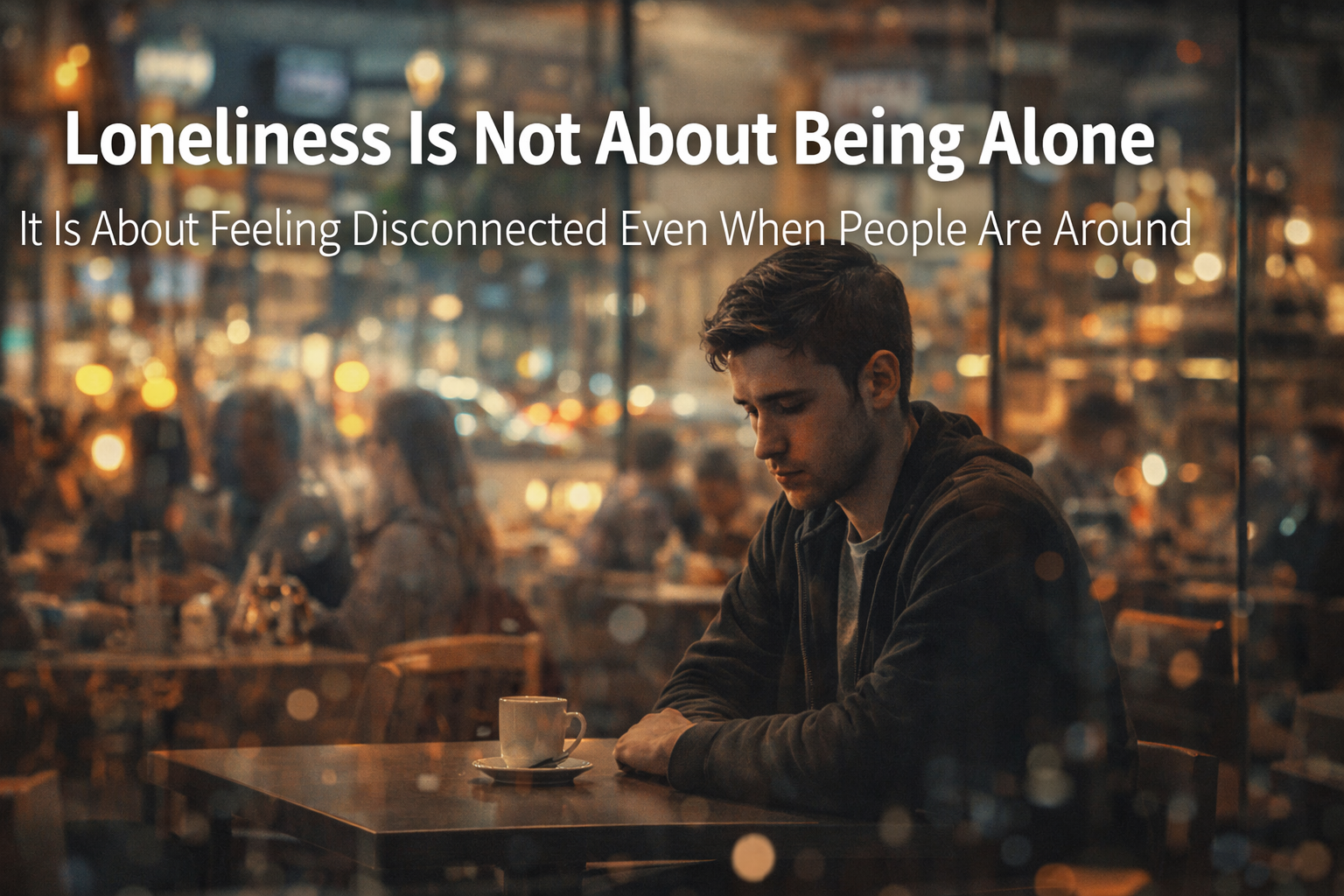
Spending Time Alone Is Not Loneliness, It Is Clarity
In a world that constantly demands attention, being alone can feel uncomfortable. Many people avoid it because it forces them to confront their thoughts.
But solitude, when used intentionally, is one of the most powerful tools for self-connection.
When you spend time alone without distractions, you start to understand what you actually think, what you actually feel, and what you actually want. Without external noise, your internal voice becomes clearer.
This does not mean isolation. It means creating space.
It could be sitting without your phone for a while. It could be writing your thoughts down. It could be taking a walk without trying to fill every second with content.
Over time, this practice builds something rare. A sense of comfort with yourself.
And when you are comfortable with yourself, you stop depending on constant external validation.
Letting Go of the Past Is Not Forgetting, It Is Releasing
Holding on to past mistakes feels logical. It feels like accountability. But often, it turns into something else entirely.
It becomes weight.
Carrying guilt, regret, or self-blame for too long keeps you stuck in a version of yourself that no longer exists. It prevents you from evolving.
Forgiveness, especially self-forgiveness, is not about denying what happened. It is about acknowledging that you acted with the knowledge and capacity you had at that time.
Growth requires space. And that space only comes when you stop holding onto what you cannot change.
Letting go is not weakness. It is maturity.
Self-Trust Is Built Through Consistency
There is a simple pattern that most people overlook.
Every time you break a promise to yourself, your self-trust weakens. Every time you follow through, it strengthens.
This is why discipline is closely tied to self-love.
When you commit to something, even something small, and actually follow through, you send a message to yourself. You become someone who can rely on yourself.
This builds confidence in a very real way. Not through words, but through evidence.
Over time, this consistency compounds. You stop questioning your ability to handle things. You start trusting your decisions. You become more stable, not because life is easier, but because you are more reliable to yourself.
Your Environment Shapes You More Than You Realize
People often focus on internal change while ignoring their surroundings. But environment plays a massive role in shaping mindset.
The people you spend time with, the content you consume, and the spaces you exist in all influence your thinking.
If you are constantly surrounded by negativity, criticism, or low standards, it becomes difficult to maintain a positive and growth-oriented mindset.
On the other hand, when you are around people who support you, challenge you in the right way, and respect your boundaries, your perspective shifts naturally.
Self-love includes making conscious choices about your environment.
It means choosing conversations that add value. It means limiting exposure to content that drains you. It means being intentional about who and what you allow into your space.
This is not about perfection. It is about direction.
Final Thought: Self-Love Is Not a Moment, It Is a Practice
There is no single point where you suddenly become someone who fully loves themselves. It does not work like that.
Self-love is built through daily actions. Through small choices. Through consistent awareness.
It shows up in how you speak to yourself after a mistake. In how you protect your energy. In how you treat your body. In how you respond to your past. In how you show up for your future.
It is not always comfortable. Sometimes it requires saying no. Sometimes it requires discipline. Sometimes it requires letting go.
But over time, it creates something powerful.
A stable, grounded, and confident version of yourself that does not depend on external validation to feel whole.
And once you reach that point, everything else in life starts to feel different.