


How Reading the Right Ideas Can Reshape Your Thinking, Strengthen Your Confidence, and Improve Emotional Stability Over Time
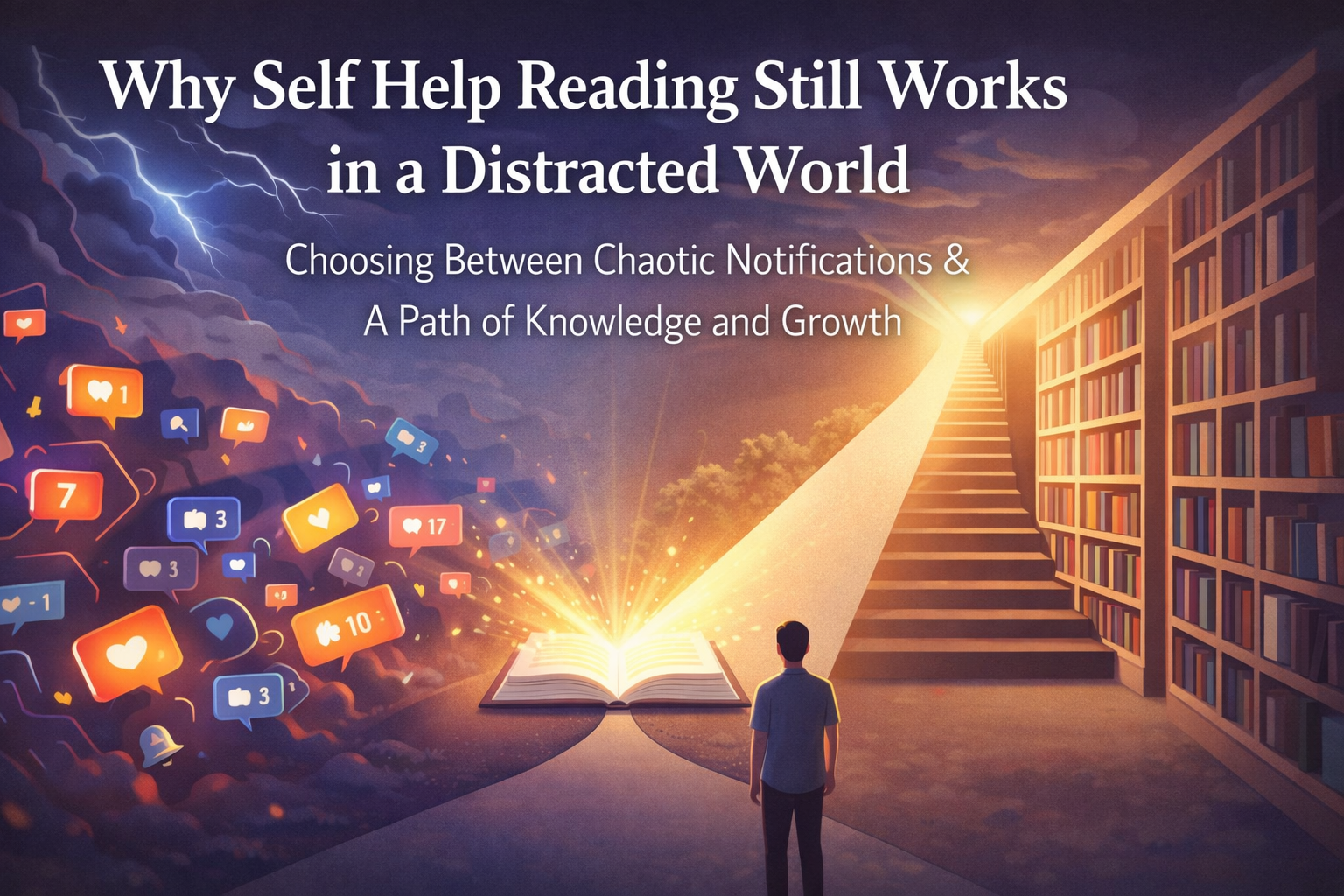
In an age where attention is fragmented across screens, notifications, deadlines, and responsibilities, many people spend most of their waking hours responding to demands instead of reflecting on why they respond the way they do, which often results in patterns of stress, impulsive decisions, strained relationships, and a constant sense of dissatisfaction even when life appears stable from the outside.
Personal growth does not usually collapse because people lack ambition or intelligence, but because they rarely create the mental space required to understand their own behavioral patterns, emotional triggers, or belief systems, and this is exactly where self help reading plays a subtle yet powerful role in helping individuals move from automatic reactions to thoughtful responses.
Reading for personal development does not promise instant transformation or dramatic overnight success, yet it consistently introduces new perspectives that challenge assumptions, encourage reflection, and gradually reshape how individuals interpret their experiences, setbacks, and opportunities.
Understanding Yourself Beyond Surface Level Reactions
A significant number of individuals move through life without ever questioning why they procrastinate in certain situations, react defensively during feedback, avoid difficult conversations, or struggle to maintain consistency in personal goals such as fitness or financial planning, because their actions are often driven by unconscious patterns developed over years of repeated experiences.
Self help reading encourages readers to examine their habits, emotional responses, and belief systems by introducing psychological insights into human behavior that explain how stress influences communication, how fear affects decision making, or how insecurity impacts professional relationships.
As readers begin to recognize these internal patterns, they develop the ability to observe their thoughts and reactions before acting on them, which allows them to interrupt destructive habits and consciously choose healthier responses instead of repeating familiar mistakes.
Confidence That Develops Through Clarity and Repetition
Confidence is frequently mistaken for an innate personality trait that only certain individuals possess, yet it is more accurately described as a product of understanding what one is capable of managing through repeated exposure to challenges and learning experiences.
Reading stories of individuals who have faced rejection, failure, or uncertainty and still progressed toward their goals can make personal obstacles appear less intimidating because it normalizes struggle as a universal experience rather than a personal weakness.
Applying lessons related to goal setting, assertive communication, or time management in everyday situations gradually builds self trust because individuals begin to see tangible evidence of their ability to influence outcomes in their lives without relying on external approval or reassurance.
Reducing Stress Through Structured Thinking
One of the most overlooked benefits of reading is its ability to create a focused mental environment that slows the pace of thought and temporarily separates individuals from the constant noise of daily obligations, allowing the mind to process emotions more calmly.
Many personal development books introduce techniques such as journaling, mindfulness practices, or cognitive reframing strategies that help readers manage overthinking and emotional turbulence by shifting attention away from uncontrollable circumstances toward actionable steps that are within their control.
As these practices are integrated into daily routines, challenges begin to feel less overwhelming because they are approached with analysis and patience rather than impulsive reactions driven by anxiety or frustration.
Exposure to New Perspectives That Inspire Growth
Reading introduces readers to alternative ways of approaching success, relationships, discipline, and purpose, which often leads to questioning long held assumptions about what is achievable or desirable in life.
This exposure encourages individuals to reassess habits that may no longer serve their long term interests such as excessive work without rest, avoidance of uncomfortable responsibilities, or persistent negative self talk.
Over time, connecting these new perspectives with real life experiences transforms inspiration into practical change because growth begins to manifest as small adjustments in daily behavior rather than abstract aspirations.
Improving Decision Making and Problem Solving Skills
Life regularly presents complex situations that require thoughtful evaluation rather than emotional reaction, whether they involve financial planning, career advancement, interpersonal conflict, or personal development goals.
Reading equips individuals with cognitive frameworks that enable them to pause before responding, analyze available options, and consider multiple strategies before taking action, which enhances flexibility and creativity in problem solving.
This broadened perspective reduces the likelihood of repeating ineffective coping mechanisms and increases the ability to navigate unfamiliar challenges with composure and clarity.
Long Term Impact on Emotional Stability
Repeated exposure to constructive ideas gradually influences the way individuals interpret both achievements and setbacks, replacing persistent negativity with a mindset that prioritizes learning and improvement over regret or self criticism.
As this mental shift becomes more established, failures begin to appear as temporary stages within a longer journey toward competence rather than permanent indicators of inadequacy, which contributes to improved emotional stability and resilience.
Although these changes may initially appear subtle, they accumulate into significant improvements in decision making confidence, stress management, and overall satisfaction with personal and professional life.
A Practical Tool for Continuous Improvement
Unlike expensive training programs or time intensive workshops, reading offers a flexible and accessible way to explore new ideas without requiring significant lifestyle adjustments, making it particularly valuable for individuals seeking to improve their mental framework alongside existing responsibilities.
The cumulative effect of consistent reading habits can be observed in stronger communication skills, better self discipline, improved stress management, and a more optimistic outlook toward future challenges, even though the process itself may not produce immediate visible results.
Final Thoughts
Personal growth rarely results from dramatic transformations or sudden bursts of motivation, and more often it develops through sustained exposure to ideas that encourage reflection, adaptability, and thoughtful decision making.
Self help reading supports this process by nurturing awareness, strengthening confidence, reducing mental pressure, inspiring behavioral change, enhancing problem solving ability, and improving emotional well being over time, making it one of the simplest yet most effective tools for individuals seeking to live more intentional and balanced lives.