



When betrayal wears a new face
There comes a point in life when you begin to realize that not every loss is a tragedy and not every separation is a failure. Some endings are not just necessary, they are essential for survival. Many people grow up believing that forgiveness means forgetting, that kindness means unlimited access, and that love means endless tolerance. Reality, however, is far more complex. Certain people do not simply make mistakes, they make choices that intentionally harm your reputation, your stability, and your emotional well-being. When those same people later return with smiles, apologies, or a softened version of themselves, the question is not whether they deserve forgiveness, but whether they deserve a place in your life again.
The idea that a person who once tried to ruin your character, finances, or relationships should never be welcomed back is not rooted in bitterness, it is rooted in wisdom. It is about recognizing patterns instead of romanticizing potential. It is about protecting what you have rebuilt instead of reopening wounds that have barely healed. Growth does not always mean giving people second chances, sometimes it means closing the door permanently.
Understanding betrayal beyond the surface
Betrayal is not just an emotional moment, it is a psychological event that reshapes how you view trust, safety, and human connection. When someone close to you turns against you, it shakes your foundation. You start questioning your judgment, replaying conversations, and wondering how you failed to see their true intentions. This kind of experience leaves a mark that does not disappear simply because time passes.
People often assume betrayal is a single act, but in reality, it is usually a series of choices. A person decides to lie, manipulate, gossip, exploit, or sabotage, not once but repeatedly. Each decision reinforces their character rather than contradicting it. When such a person later appears remorseful, it is easy to mistake emotional performance for genuine transformation. Yet true change is far deeper than a well-delivered apology or a temporary shift in behavior.
Why attacks on character are never small
Your character is one of your most valuable assets in life. It shapes how others perceive you, how opportunities come to you, and how relationships unfold around you. When someone actively tries to destroy your character, they are not just criticizing you, they are attempting to redefine your identity in the eyes of others. They may spread rumors, twist your words, or paint you as untrustworthy, irresponsible, or malicious.
The damage caused by such actions can last far longer than the initial conflict. Even after the truth emerges, doubts may linger in people’s minds. Rebuilding a reputation takes far more effort than tearing it down. Allowing the same person who once tried to ruin your character back into your inner circle is not an act of forgiveness, it is a gamble with your credibility and emotional safety.
A person who has shown a willingness to harm your reputation has already revealed a fundamental flaw in their moral compass. Expecting them to suddenly become your protector simply because they now appear calmer or more polished is unrealistic and dangerous.
The deeper impact of financial betrayal
Money is not just currency, it is energy converted into security, comfort, and possibility. When someone exploits you financially, they are not merely mishandling funds, they are abusing your trust and your generosity. Financial betrayal can take many forms, borrowing without intention to repay, manipulating you into bad investments, draining your resources emotionally and materially, or using your financial stability for personal gain.
The emotional consequences of financial harm often go unnoticed by outsiders. Stress increases, sleep becomes irregular, confidence weakens, and even your closest relationships can suffer under the weight of financial pressure. Trust, once broken in this way, is not easily restored.
When a person who once took advantage of your money later tries to re-enter your life, their change in behavior must be examined with extreme caution. Many people learn to hide their intentions rather than transform their values. Without clear accountability, restitution, and consistent ethical behavior over time, welcoming them back risks repeating the same cycle.
When someone tries to destroy your relationships
Relationships are the emotional architecture of your life. They shape your happiness, your support system, and your sense of belonging. When someone actively tries to sabotage your relationships, they are not just interfering socially, they are attempting to control your emotional world. This can happen through spreading lies, creating misunderstandings, isolating you from loved ones, or manipulating others against you.
Such behavior often stems from jealousy, insecurity, or a need for dominance. A person who once sought to divide you from those you care about has already proven that they prioritize their own ego over your well-being. Letting them back into your life without serious reflection is an invitation for history to repeat itself.
True friends and family members do not seek to break your bonds with others. They may disagree with you, but they do not systematically try to dismantle your social world. Recognizing this difference is crucial to maintaining healthy boundaries.
The metaphor of the snake and human nature
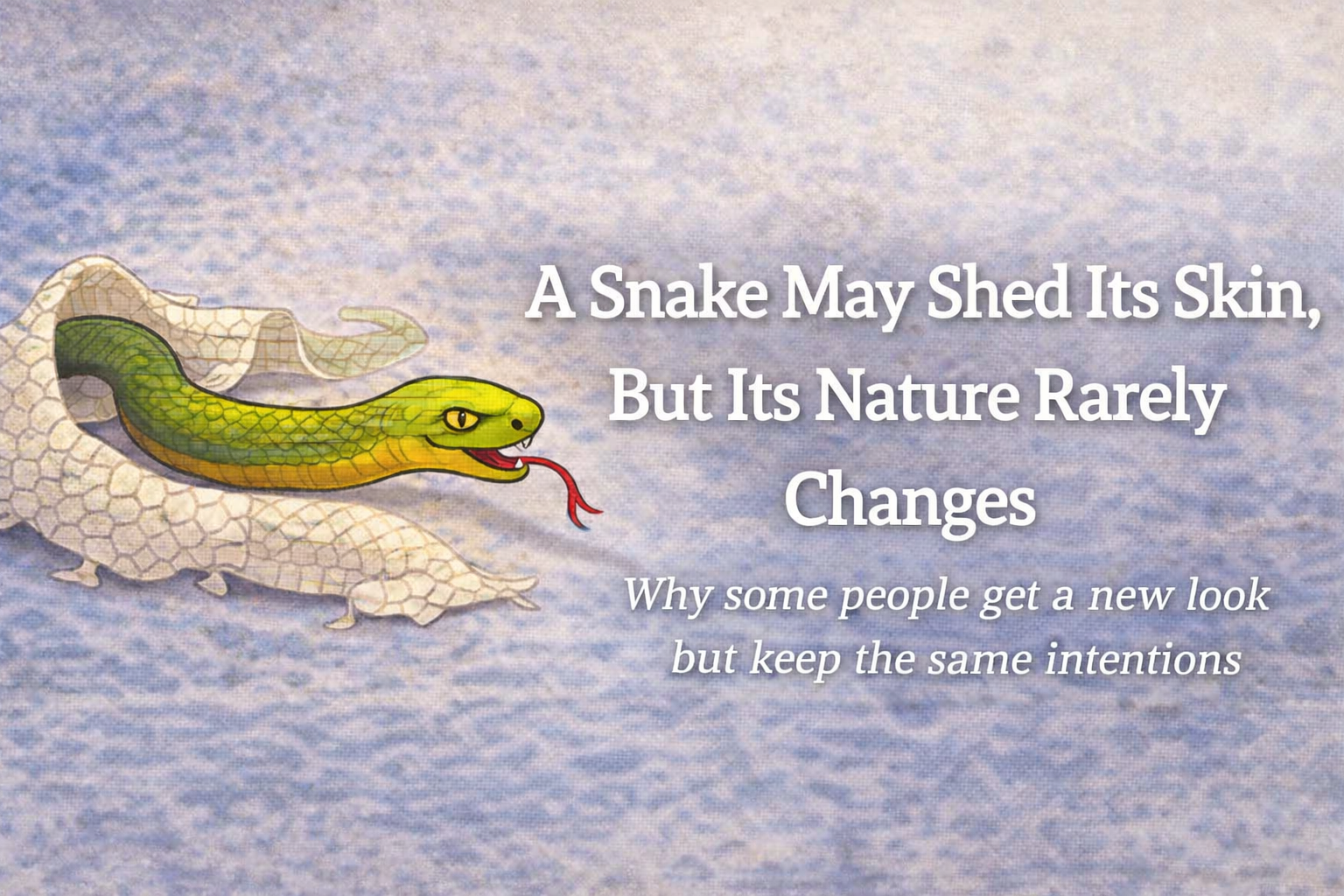
The comparison between certain people and a snake shedding its skin carries deep psychological meaning. A snake sheds its outer layer as part of its natural growth, yet its core nature remains unchanged. It does not become gentle or harmless simply because it looks different. It remains instinct-driven, calculated, and capable of harm.
Similarly, some individuals may alter their appearance, tone, or behavior, but their underlying character remains the same. They might speak more softly, apologize more eloquently, or present themselves as changed, but their values, patterns, and motivations have not fundamentally shifted.
This does not mean that people are incapable of growth. Genuine transformation is possible, but it is rare, slow, and unmistakable. It involves deep self-reflection, accountability, consistent behavior over time, and a willingness to accept consequences without resentment. Most people, however, prefer cosmetic change because it is easier than confronting their own flaws.
Forgiveness versus reconciliation
One of the biggest misunderstandings in relationships is the idea that forgiveness automatically requires reconciliation. Forgiveness is an internal process that frees you from resentment, bitterness, and emotional bondage. Reconciliation, on the other hand, is a relational decision that determines whether someone regains access to your life.
You can forgive someone without ever allowing them back into your personal world. In fact, true forgiveness often makes it easier to set firm boundaries rather than cling to harmful attachments. Letting go emotionally does not mean reopening your life to those who once tried to ruin it.
Many people struggle with this distinction because they fear being judged as cold or unforgiving. Society often glorifies unconditional forgiveness without acknowledging the importance of self-respect. Forgiveness is powerful, but so is discernment.
Boundaries as an act of self-respect
Boundaries are not barriers meant to isolate you, they are safeguards that define how you allow others to treat you. Setting boundaries means recognizing your worth and refusing to tolerate manipulation, disrespect, or emotional harm. The idea that you should never re-friend or re-family someone who once tried to destroy you is ultimately a boundary statement.
This does not mean you hold grudges or seek revenge. It simply means you have learned from experience and refuse to repeat the same mistakes. Protecting your peace is not selfish, it is necessary.
Strong boundaries attract healthier relationships because they signal that you value yourself. Weak boundaries invite chaos, drama, and repeated betrayal.
Trust, patterns, and human behavior
Human behavior is largely shaped by patterns rather than isolated incidents. When someone has already demonstrated harmful tendencies, the probability of repetition remains high unless there has been clear and sustained change. Time alone does not guarantee transformation.
People often return after conflict not because they have changed, but because they miss the benefits you once provided, whether emotional, financial, or social. Recognizing this difference is essential to making wise decisions.
Trust should be rebuilt slowly, based on consistent integrity rather than emotional persuasion. If someone truly regrets their past actions, they will respect your boundaries even if that means accepting your distance.
Intuition as an overlooked form of wisdom
After betrayal, many people ignore their intuition, convincing themselves they are being too harsh or paranoid. Yet that inner unease is often your mind processing past experience and protecting you from future harm. Learning to trust your instincts does not mean becoming suspicious of everyone, it means honoring what you have been through.
If your body feels tense around someone who once hurt you, that is not a flaw, it is awareness. Dismissing that feeling in the name of politeness or nostalgia can lead you back into familiar pain.
Growth sometimes means letting go
Personal growth is not always about becoming more forgiving, sometimes it is about becoming more selective. Letting go of toxic connections creates space for relationships that genuinely support, respect, and uplift you. Clinging to people who once tried to ruin you can stunt your emotional development and keep you stuck in old cycles.
Moving forward does not mean forgetting what happened, it means integrating the lesson without allowing it to define your future. Sometimes the bravest decision is to walk away permanently.
When family betrays you
The phrase “re-family” carries a heavy emotional weight because it challenges the assumption that blood guarantees loyalty. Family betrayal can be among the most painful experiences a person endures. Many people feel obligated to tolerate harmful behavior simply because of shared genetics.
However, family status does not grant someone permission to disrespect, exploit, or emotionally damage you. Love within families should be built on mutual respect, not entitlement. Choosing distance from a toxic family member is not a betrayal, it is an act of self-preservation.
Professional betrayal and workplace reality
This wisdom applies just as much in professional environments. Colleagues who sabotage your reputation, undermine your work, or take credit for your achievements cannot be casually trusted if they later act friendly. The workplace is often shaped by competition, politics, and self-interest, making discernment even more critical.
Maintaining professional boundaries does not mean holding grudges, it means being strategic about who you trust and collaborate with. Some bridges, once burned, should not be rebuilt.
Looking beyond appearances
In a world dominated by curated images and polished personas, it is easy to mistake surface-level change for inner transformation. Charm, smooth apologies, and temporary good behavior can mask deeper issues. The idea that a snake remains a snake after shedding its skin reminds you to look beyond appearances and observe long-term patterns.
Character reveals itself through consistency, not convenience. A person who truly changes does not seek validation for their transformation, they demonstrate it through sustained integrity.
Final reflection: Protecting your peace without losing your heart
The message that you should never re-friend or re-family someone who once tried to ruin you is not about becoming cold, cynical, or isolated. It is about becoming wiser, more self-aware, and emotionally disciplined. It encourages you to forgive without forgetting, to love without losing yourself, and to trust without naivety.
Some people are meant to be lessons, not lifelong companions. A snake may shed its skin and look new, but its nature rarely changes. Recognizing this truth is not cruelty, it is clarity.
Choosing who gets access to your life is one of the most powerful decisions you will ever make. When you protect your character, your finances, and your relationships, you are not just guarding your past, you are shaping your future with intention and self-respect.