





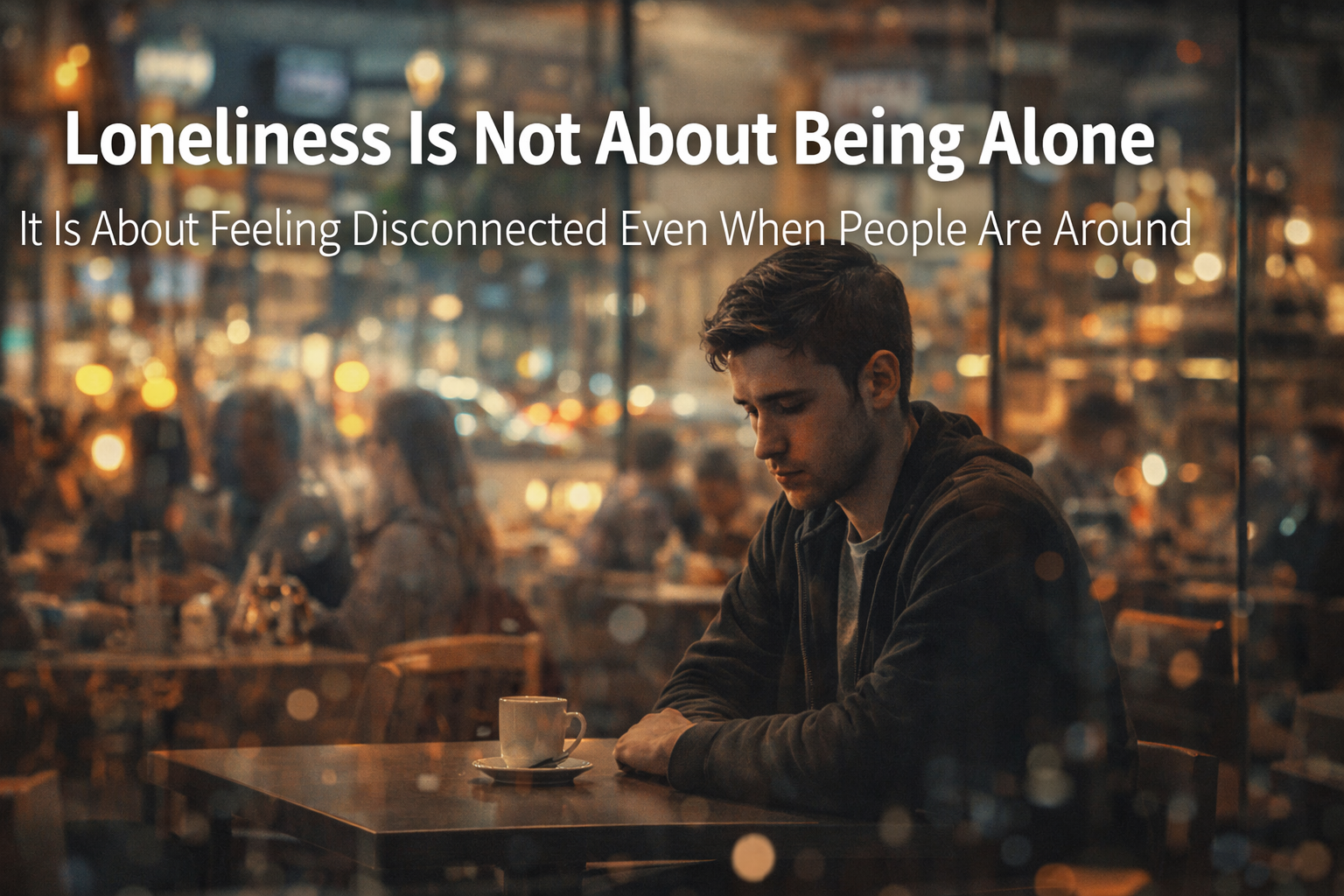
Loneliness is often misunderstood. Most people think it only happens when someone is physically alone. That is not always true. You can be surrounded by colleagues at work, talk to friends every day, sit with your family every evening, and still feel emotionally distant from everyone around you.
It is possible to attend meetings all day, reply to messages constantly, and stay socially active, yet return home with a strange emptiness that refuses to go away. Everything may look fine on the outside. Your routine is working. Your life seems stable. Still, something feels missing inside.
That is because loneliness is not the absence of people. It is the absence of connection.
When Loneliness Slowly Becomes a Habit
Loneliness rarely appears suddenly. It builds slowly over time.
Sometimes it starts when you move to a new city for work. Sometimes it happens when old friendships fade because everyone becomes busy with their own lives. In other cases, it may begin after a breakup or during a stressful phase in your career where relationships take a back seat.
At first, the emotional distance feels manageable. You assume things will return to normal soon. But weeks turn into months, and small gaps in connection begin to feel wider than expected.
You start wondering if people truly understand you. Conversations begin to feel surface level. You talk, but you do not feel heard. You listen, but you do not feel understood.
Over time, loneliness becomes less about who is around you and more about how connected you feel to them.
The Thoughts That Make It Worse
One of the hardest parts about loneliness is how it affects your thinking.
You may begin interpreting normal situations in negative ways without even realizing it. A delayed reply from a friend might feel like rejection. Cancelled plans may seem like proof that you are not important. Someone being busy could feel like they are losing interest in you.
These interpretations are not always accurate. But when you already feel disconnected, your mind starts searching for explanations that match how you feel.
You begin telling yourself stories that reinforce loneliness.
You think people are drifting away, even when they are simply occupied with their own responsibilities. You assume silence means disinterest. You believe distance means you are no longer valued.
Gradually, these thoughts make you hesitate before reaching out again. And that hesitation keeps the loneliness alive.
Physical Health Affects Emotional Strength
When someone feels lonely for a long time, their daily habits often begin to change.
Sleep patterns become irregular. Meals are skipped without much thought. Physical movement reduces because motivation feels low. Even small tasks seem tiring.
These changes might appear harmless at first. But over time, they affect energy levels, mood stability, and mental clarity.
Fatigue makes negative thinking stronger. Poor sleep increases emotional sensitivity. Lack of movement reduces motivation further.
Looking after your physical health does not eliminate loneliness completely. But it makes difficult emotions easier to manage. A stable routine gives your mind a stronger foundation during challenging periods.
Why Talking Still Helps
Loneliness often convinces people that sharing their feelings will burden others. You may feel that your problems are too small to mention. Or too complicated to explain.
As a result, silence becomes the easier option.
But expressing how you feel can reduce emotional pressure more than expected. Even a short conversation with someone you trust can create relief.
Sometimes, you do not need advice or solutions. You just need someone to listen without judgement.
Being heard reminds you that your experiences are valid. It breaks the feeling that you are dealing with everything on your own.
Having Something to Look Forward To Matters
Days tend to feel heavier when they are repetitive.
When nothing different is planned, time passes without leaving any meaningful memories behind. Life starts to feel like a routine you are simply going through rather than participating in.
Planning small enjoyable activities can change that.
It does not have to be anything dramatic. A short walk outside, watching a favourite movie, reading, or trying a hobby can introduce variation into your schedule.
Anticipation itself improves mood. Looking forward to something creates emotional markers throughout the week.
It reminds you that your time includes moments meant for enjoyment, not just responsibility.
Being Kind to Yourself Is Important
People who feel lonely often blame themselves for it.
You might think you are not social enough. Or interesting enough. Or that you somehow failed to maintain relationships properly.
This kind of self criticism makes loneliness worse.
Treating yourself with patience during vulnerable periods is not weakness. It is necessary for recovery.
If a close friend felt isolated, you would probably show understanding rather than judgement. Offering yourself the same compassion allows healing to begin.
Small Steps Make a Difference
When loneliness reduces motivation, large social commitments may feel overwhelming.
You may not feel ready to attend gatherings or meet new groups immediately. That is perfectly normal.
Starting with small actions can rebuild confidence gradually.
Sending a message to someone. Spending time outdoors. Joining an activity once a week.
Each completed step creates momentum. It shows that change is possible without requiring drastic transformation.
Progress comes from consistency, not perfection.
Patience Is Part of Healing
Building meaningful connections takes time.
Loneliness can create urgency. You may feel tempted to accept unhealthy relationships simply to avoid being alone.
But rushing into connections rarely solves the problem. In many cases, it creates new emotional challenges.
Allowing relationships to grow naturally increases the chance of forming bonds that feel genuine and lasting.
Trying Something New Helps
Engaging in unfamiliar activities introduces opportunities to meet people with similar interests.
It might feel uncomfortable initially. But repeated exposure reduces hesitation over time.
Learning something new also shifts focus away from rumination. Your attention moves toward development and creativity instead of negative thinking.
Conclusion
Loneliness may never disappear completely from life, because it is a natural emotional response during periods of change or uncertainty.
However, responding to it with patience, openness, and small intentional actions gradually creates space for connection.
Feeling lonely does not mean something is wrong with you. It simply means your need for meaningful connection is asking to be noticed.
And that need deserves attention, not silence.